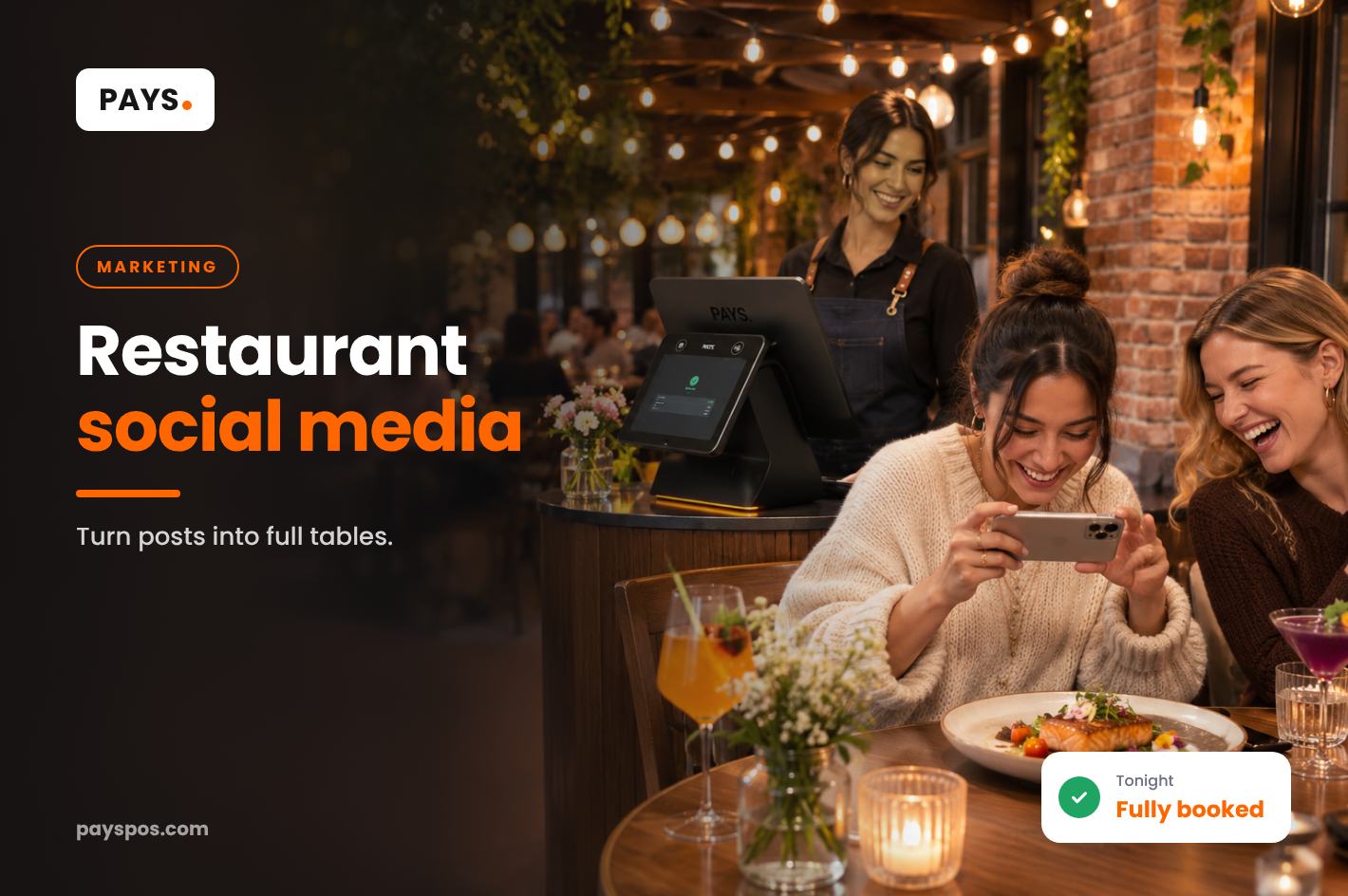
A guest takes a photo of your salmon before taking the first bite. Her friend laughs, leans in and says, “Post that.” Within an hour, a few hundred people in your neighborhood have seen your dish, your dining room and your string lights.
That moment is restaurant social media at its best: real, local and free. The challenge is turning those moments into a steady stream of guests rather than a lucky post now and then.
This guide covers practical restaurant social media ideas that work for busy owners: what to post, how often, which platforms to focus on, how to handle reviews, and how to tell whether any of it is actually bringing people through the door.
Why Restaurant Social Media Matters
People decide where to eat on their phones. They scroll Instagram and TikTok for ideas, check Google for hours and reviews, and look at photos before they ever see a menu. Restaurant social media is often a guest’s first impression of your food, your space and your vibe.
Done well, it helps you:
- Get discovered by people nearby who have never heard of you
- Stay top of mind with past guests
- Fill slow nights with specials and events
- Build trust through real photos, real staff and real reviews
- Drive direct orders instead of relying on delivery apps
1. Choose the Right Platforms
You don’t need to be everywhere. Most restaurants get the best results by focusing on a few platforms:
- Instagram: Photos, Reels and Stories. The core platform for most restaurants.
- TikTok: Short, entertaining videos. Great for reaching new, younger audiences.
- Facebook: Events, local groups and an older audience. Still useful for many neighborhoods.
- Google Business Profile: Technically not social media, but critical. Photos, posts, hours and reviews all live here.
Pick two you can keep up with consistently. A steady presence on two platforms beats an abandoned account on five.
2. Post Consistently
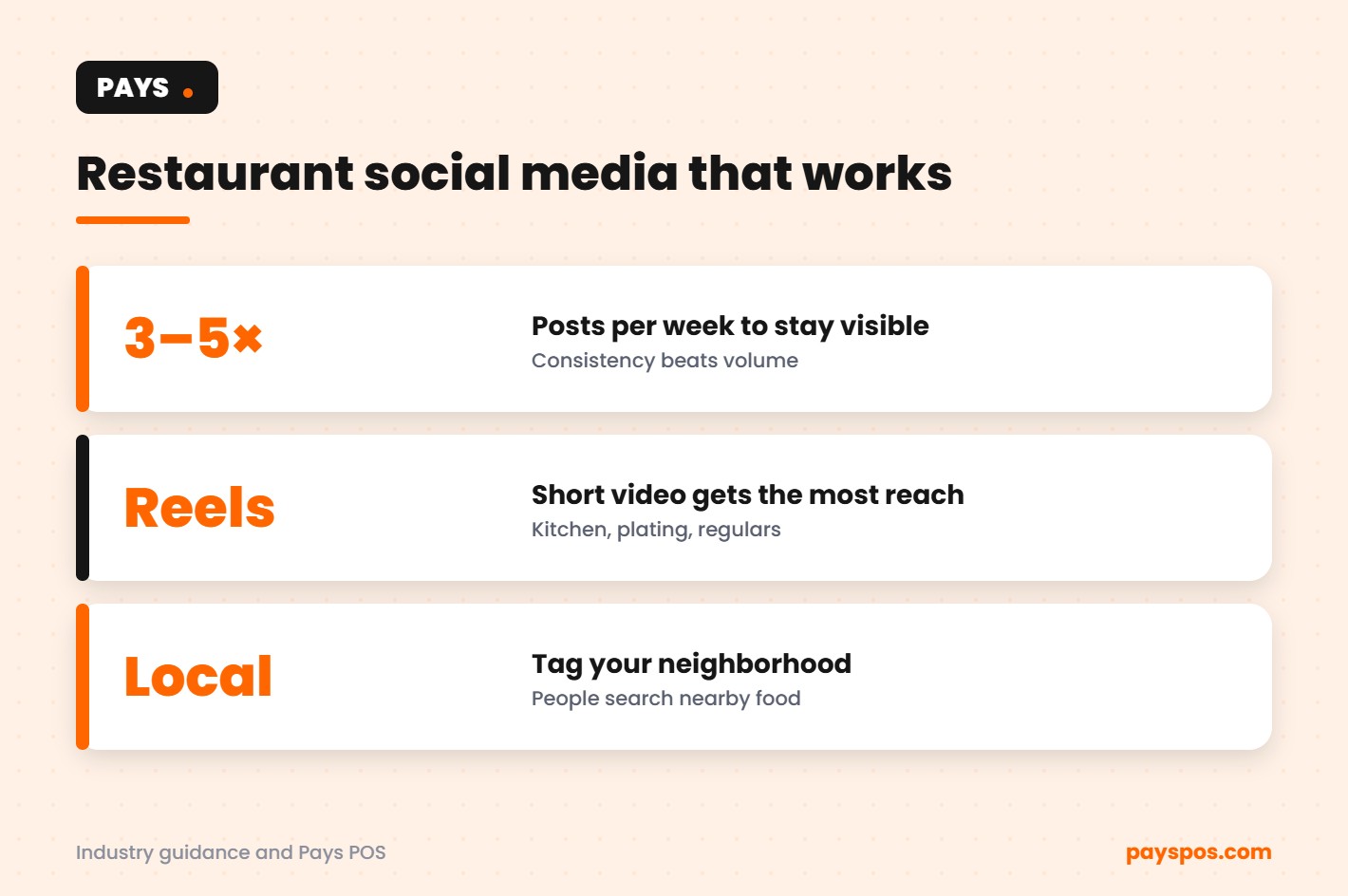
Consistency matters more than perfection in restaurant social media. Many restaurants aim for three to five posts a week on their main platform, plus regular Stories. Batch your content: shoot several dishes or videos in one session during a quiet afternoon, then schedule them through the week.
3. Show Your Kitchen
Behind-the-scenes content is some of the most engaging restaurant social media there is. People love seeing how food is made.
- Dough being stretched, sauces simmering, steaks hitting the grill
- The morning prep routine
- A chef plating a signature dish
- Fresh deliveries from local farms or suppliers
These clips don’t need fancy equipment. A phone, good light and a steady hand are enough.
4. Make Short Video a Priority
Short vertical video, like Reels and TikToks, tends to reach far more people than static photos. Keep videos short, start with the most interesting moment and add simple text on screen so they work without sound.
Ideas that work well: a dish from raw ingredients to plate in 15 seconds, “what $20 gets you here,” a staff member’s favorite order, or a time-lapse of a busy Friday night.
5. Spotlight Your People
Guests connect with people, not logos. Introduce your chef, your servers, your bartender and your regulars (with permission). A quick “meet the team” post humanizes your restaurant and often gets more engagement than food photos.
6. Make Your Food Easy to Photograph
Some of the best restaurant social media is created by your guests. Help them:
- Plate dishes with height, color and contrast
- Use lighting that flatters food, especially at tables by the window
- Create a signature dish or drink that’s visually memorable
- Add a small, tasteful sign inviting guests to tag you
Every guest post is free marketing to their friends and followers.
7. Reshare User-Generated Content
When guests tag you, thank them and reshare their posts to your Stories (with permission). It rewards them, encourages others to post and fills your feed with authentic content you didn’t have to create.
8. Promote Specials and Events
Use restaurant social media to fill slow periods. Post weekday specials, happy hour, trivia nights, live music, holiday menus and limited-time dishes. Give people a reason to come in this week, not someday.
Keep the details clear: what it is, when it happens and how to book or order.
9. Treat Reviews as Part of Social Media
Reviews on Google and Yelp are often the deciding factor for new guests. Respond to every review, positive or negative, politely and quickly. Thank people for kind words and address complaints calmly and professionally.
For more on this, see our guide on how to increase Google and Yelp reviews.
10. Link Social Posts to Direct Ordering
Social media works best when it’s easy to act on. Put your online ordering link in your bio and Stories. Every order placed directly through your own site avoids marketplace commissions.
Pays includes online ordering connected to your POS, so orders from social media land straight on your kitchen display.
11. Collaborate Locally
Partner with local food bloggers, nearby businesses and community groups. A joint giveaway with the coffee shop next door, a feature from a local foodie account or a fundraiser night for a school can introduce you to an entire new audience.
For more creative ideas, read our list of guerrilla marketing ideas for restaurants.
12. Track What Actually Brings People In
Likes are nice, but full tables are the goal. Measure whether your restaurant social media efforts drive sales:
- Create a social-only special or code and track redemptions in your POS
- Compare sales on days you promote a special versus days you don’t
- Watch online orders after posting your ordering link
- Ask new guests how they heard about you
Real-time POS reports make these comparisons quick.
A Real-World Example
Picture a neighborhood Italian restaurant with steady weekends and quiet Tuesdays. The owner decides to treat restaurant social media as a weekly habit rather than an occasional chore.
Every Monday afternoon, the chef films three short clips: fresh pasta being cut, a sauce reducing and a plated special. The manager posts one clip on Tuesday, Thursday and Saturday, and shares guest photos in Stories over the weekend. A “Tuesday pasta night” special appears only on Instagram, with a simple code the server enters in the POS.
After a month, the POS shows the code redeemed dozens of times on Tuesdays, and the online ordering link in the bio is bringing in more direct pickup orders. None of it required a marketing agency. Just consistent, real restaurant social media tied to a clear offer and tracked in the POS.
Seasonal Moments Worth Planning For
Some dates almost guarantee engagement: Valentine’s Day, Mother’s Day, Father’s Day, graduation season, big sports events, Thanksgiving week and New Year’s Eve. Plan restaurant social media for these moments a few weeks ahead, with teaser posts, booking reminders and special menus. Local events, like street fairs or concerts nearby, are just as valuable for neighborhood restaurants.
Using Hashtags and Local Search
Hashtags still help people discover restaurant social media, especially local ones. Mix a few broad food tags with specific local tags, like your city, neighborhood and cuisine. Tag your location on every post, since many people browse food by place.
Keep your Google Business Profile in sync with your social accounts. Post your weekly special there too, add fresh photos regularly and make sure your hours and menu link are always correct. For many guests, Google is the bridge between seeing your post and walking through your door.
Turning Followers Into Regulars
Followers are a starting point. The real value of restaurant social media comes when followers become regular guests. Give them reasons to return: follower-only specials, early access to new menu items, birthday treats or a loyalty program they can join at checkout.
Recognize regulars publicly (with permission) and celebrate milestones like anniversaries, new dishes and staff achievements. People like being part of a story, and a restaurant with a story is easier to come back to.
Build a Simple Content Calendar
The hardest part of restaurant social media is coming up with something to post when you’re busy running a restaurant. A simple weekly theme removes the guesswork.
| Day | Theme | Example |
|---|---|---|
| Monday | Behind the scenes | Prep, deliveries, the kitchen before opening |
| Tuesday | Dish spotlight | A close-up video of a signature plate |
| Wednesday | Meet the team | A quick intro to a server or cook |
| Thursday | Weekend preview | Specials, events, live music |
| Friday | The rush | A short clip of a busy, happy dining room |
| Weekend | Guest content | Reshared tagged posts and Stories |
With a calendar like this, restaurant social media becomes a 15-minute daily habit instead of a weekly scramble.
Food Photography Tips Anyone Can Use
You don’t need a professional photographer for great restaurant social media. A modern phone and a few habits go a long way:
- Use natural light. Shoot near a window during the day. Avoid harsh overhead lights and flash.
- Get close. Fill the frame with the food. Texture sells: crispy edges, melting cheese, glossy sauce.
- Try two angles. Overhead for bowls, pizzas and spreads. Eye level for burgers, sandwiches and drinks.
- Add movement. A pour, a cheese pull, steam rising or a hand reaching in makes content feel alive.
- Keep backgrounds clean. Move clutter out of the frame.
Should You Pay for Social Media Ads?
Organic restaurant social media can take you far, but a small paid budget can help at key moments: a grand opening, a new menu, a holiday promotion or an event you need to fill.
Keep targeting local, often within a few miles of your restaurant. Promote posts that are already performing well organically, since they’re proven to grab attention. Always include a clear action, like booking a table or ordering online, and track results in your POS so you know whether the spend paid off.
Handling Negative Comments and Reviews
Every restaurant gets criticism sometimes. How you respond matters more than the complaint itself, because future guests read your replies.
- Respond quickly and calmly. Never argue in public.
- Thank them for the feedback. Even when it stings.
- Acknowledge the issue. Without excuses.
- Offer to make it right. Invite them to contact you directly.
- Fix the underlying problem. If the same complaint keeps appearing, it’s an operations issue, not a social media issue.
Working With Local Influencers
Local food creators can introduce your restaurant to thousands of nearby followers. Look for accounts whose audience actually lives near you, whose content style matches your brand and whose engagement looks genuine.
Start with a simple invitation to try a few dishes. Be clear about any expectations up front, and track results with a dedicated code or special. Smaller, highly local creators often deliver better results for restaurant social media than big accounts with followers spread across the country.
Restaurant Social Media by Concept
- Fine dining: Elegant plating, the chef’s story, wine pairings and special occasions.
- Fast casual: Speed, customization, value and quick lunch ideas.
- Bars and breweries: New pours, events, game nights and the crowd.
- Cafés and bakeries: Morning light, latte art, fresh bakes and cozy corners.
- Pizza and takeout: Cheese pulls, the oven, family deals and online ordering links.
Match your restaurant social media style to the experience guests actually get when they walk in.
Getting Your Team Involved
You don’t have to run restaurant social media alone. Your staff are often your best content creators. A server might have a great eye for photos. A cook might enjoy filming prep. A bartender might be a natural on camera.
Set a few simple guidelines: keep it positive, respect guest privacy, never post during a rush and run anything unusual past a manager. Then let people contribute ideas and clips. Content from the team feels more authentic, and it spreads the workload so posting doesn’t stop when the owner gets busy.
Consider a small reward for the post that brings in the most engagement each month. It keeps the team interested and turns restaurant social media into a shared project rather than one person’s chore.
Measuring Success Without Getting Lost in Numbers
Every platform offers dozens of statistics. Focus on a few that connect to real business results: reach in your local area, saves and shares, profile visits, link clicks to your ordering page, and redemptions of social-only offers in your POS. Check them monthly, keep what works and drop what doesn’t.
Common Restaurant Social Media Mistakes
- Posting only when you remember. Inconsistency kills reach.
- Using only stock photos. Guests want to see your real food and space.
- Ignoring comments and messages. Social media is a conversation.
- No clear next step. Every post should make it easy to book, order or visit.
- Outdated information. Wrong hours or old menus frustrate guests.
- Measuring likes instead of sales. The goal is guests, not applause.
Restaurant Social Media Weekly Checklist
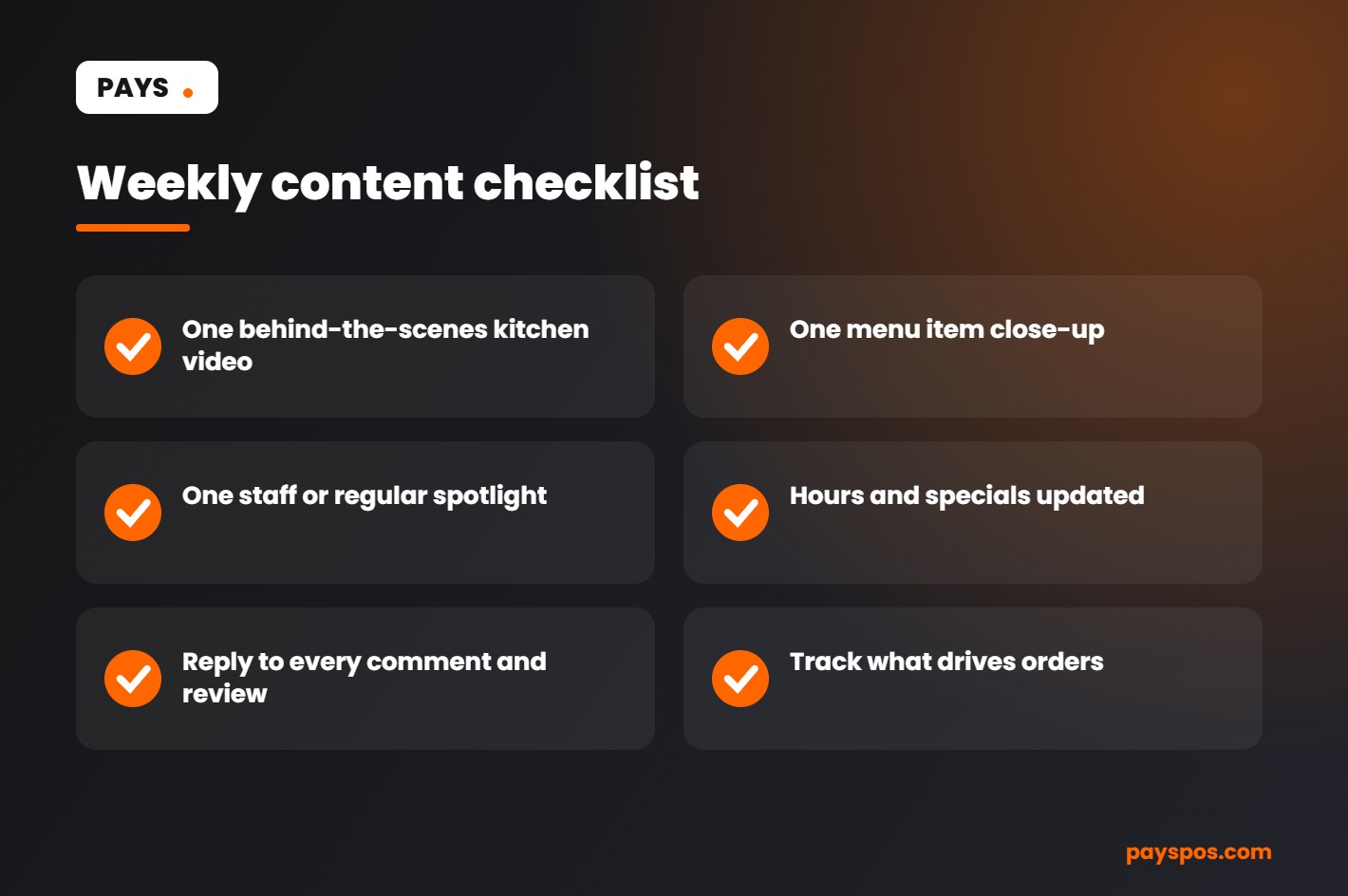
- One behind-the-scenes kitchen video
- One close-up of a signature dish
- One staff or regular spotlight
- Stories with today’s specials
- Replies to every comment and review
- A quick look at which posts drove orders
Frequently Asked Questions
How often should a restaurant post on social media?
Many restaurants aim for three to five posts a week on their main platform, plus regular Stories. Consistency matters most.
Which social media platform is best for restaurants?
Instagram is the core platform for most restaurants, with TikTok growing fast. Google Business Profile is essential for local search.
What should a restaurant post on social media?
Behind-the-scenes kitchen videos, dish close-ups, staff spotlights, specials, events and reshared guest posts.
How do I know if social media is working for my restaurant?
Track social-only specials, online orders and sales on promotion days in your POS, and ask new guests how they found you.
Do restaurants need TikTok?
Not every restaurant, but TikTok can reach new, local audiences quickly with short, entertaining videos. If you can post consistently, it’s worth testing.
How much time does restaurant social media take?
With a content calendar and batch filming, many owners spend around 15 to 30 minutes a day, plus one longer session each week to film and plan.
Should restaurants respond to every comment?
Yes, as much as possible. Quick, friendly replies build loyalty and signal to platforms that your content is worth showing to more people. It’s one of the easiest wins in restaurant social media.
What is the biggest restaurant social media mistake?
Posting inconsistently and without a clear next step. Every post should make it easy for someone to book, order or visit.
Can social media replace delivery apps for a restaurant?
Not entirely, but it can shift more orders to your own online ordering, where you keep the full margin. Put your ordering link everywhere and give followers a reason to order direct.
Should a restaurant hire a social media manager?
Many small restaurants start in-house with a simple calendar. Once posting becomes consistent and results are clear, hiring part-time help or an agency can free up time for growth.
From Posts to Full Tables
Restaurant social media doesn’t need a big budget. It needs consistency, real content and a clear path from a post to an order.
See how Pays POS connects online ordering, reporting and your kitchen, or talk to our team.