It’s 7:45 p.m. A nurse finishing a shift needs milk, bread and something quick for dinner. A teenager wants a cold drink and a snack. A contractor grabs coffee, gum and a phone charger. Each visit takes two minutes, and all three leave happy.
That’s the heart of a convenience store business: being close, being open and being fast. It looks simple from the outside. Behind the counter, it’s a business of thousands of small decisions about location, products, pricing, staffing and inventory.
This guide walks through how to start and run a convenience store business step by step, with practical advice on everything from licenses and product mix to theft prevention and the technology that keeps checkout moving.
What Makes a Convenience Store Business Different?
A convenience store sells a smaller range of everyday items than a supermarket, usually at slightly higher prices, in exchange for speed and proximity. Customers aren’t doing a weekly shop. They’re solving an immediate need.
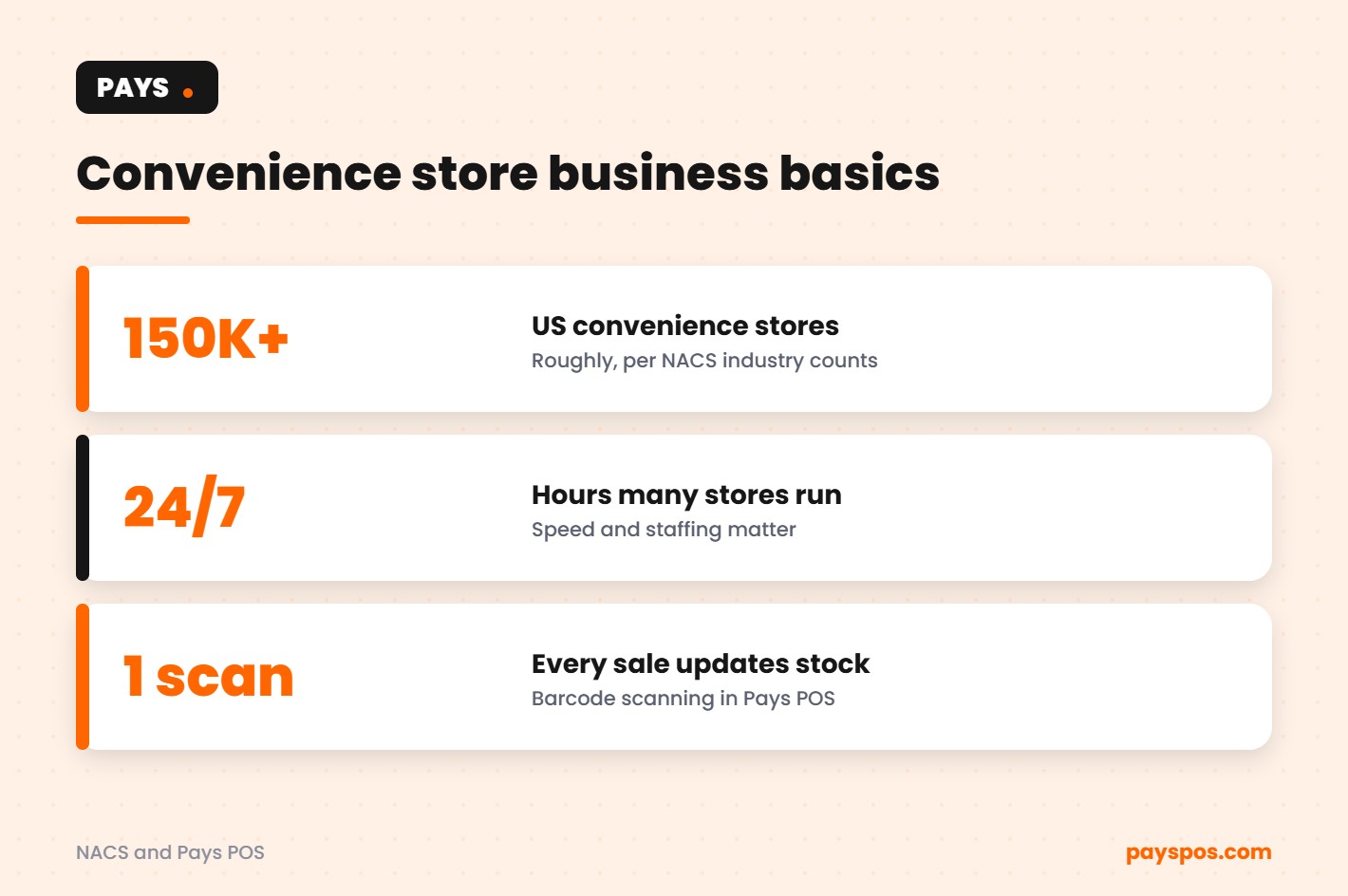
The industry is large. According to NACS, the Association for Convenience & Fuel Retailing, there are roughly 150,000 convenience stores in the United States. Many are independent, single-store operations.
That means a convenience store business competes on things big chains can’t always match: location, friendly service, the right local products and a checkout that never makes people wait.
Step 1: Decide on Your Convenience Store Business Format
- Neighborhood corner store: Everyday groceries, snacks, drinks and household basics for nearby residents.
- Convenience store with fuel: Higher traffic, more complexity and larger investment.
- Urban grab-and-go: Small footprint near transit or offices, focused on drinks, snacks and prepared food.
- Specialty convenience: A focus on a particular community, like international foods, organic products or a deli counter.
Your format determines your space, startup costs, licenses and product mix.
Step 2: Write a Business Plan
A business plan helps you test the numbers before committing. The SBA’s business plan guide covers the basics. For a convenience store business, focus on expected daily customers, average basket size, gross margin by category and fixed costs like rent and utilities.
Step 3: Choose the Right Location
Location is the most important decision in a convenience store business. Look for:
- Steady foot or car traffic throughout the day
- Dense residential areas, offices, schools or transit nearby
- Easy parking or quick walk-in access
- Limited direct competition within walking distance
- Good visibility from the street
Spend time observing potential sites at different times of day. Count people, cars and how many enter nearby stores.
Step 4: Get the Right Licenses
Requirements vary by state and city, but a convenience store business typically needs a business license, sales tax permit and food retail permit. Selling tobacco, alcohol or lottery tickets usually requires additional licenses with their own rules and inspections.
Age-restricted products bring compliance responsibilities. Selling to underage customers can lead to fines or loss of your license, so age verification must be built into every sale.
Step 5: Plan Your Product Mix
Most convenience stores carry a mix of:
- Beverages: soda, water, energy drinks, coffee
- Snacks: chips, candy, cookies, nuts
- Grocery basics: milk, bread, eggs
- Prepared food: sandwiches, hot food, baked goods
- Household and personal care items
- Age-restricted products where licensed
Start with a core range, then let your sales data guide what to expand and what to drop.

Step 6: Price for Margin and Speed
Margins vary widely by category. Prepared food and beverages often carry higher margins than items like tobacco. Review pricing by category, watch what competitors nearby charge and adjust as supplier costs change.
Card fees matter too. With many small transactions, processing costs add up. A dual pricing program can help offset card fees.
Step 7: Set Up Fast, Accurate Checkout
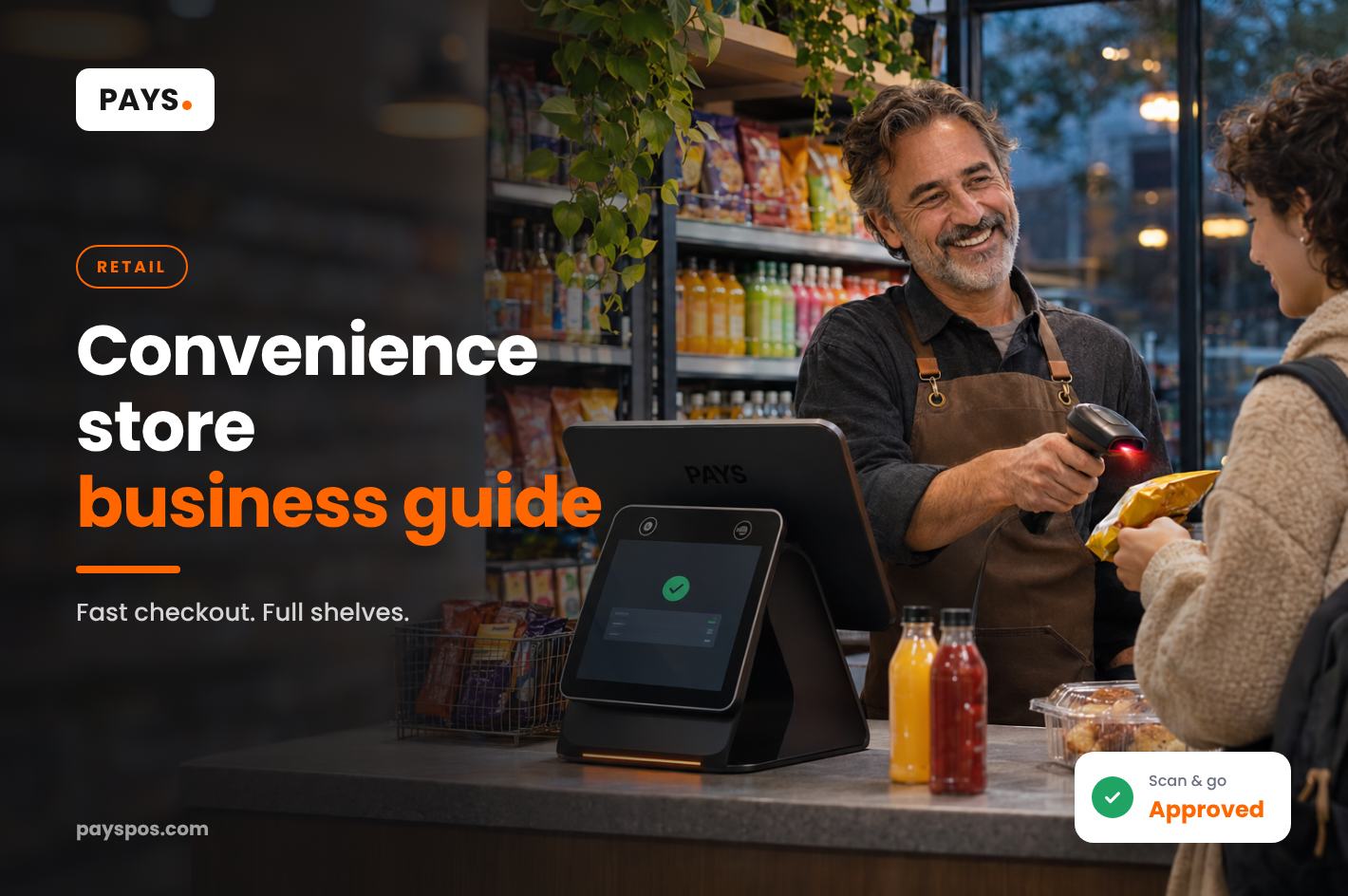
A convenience store business lives on speed. Every item should be barcoded and in your POS, so the cashier simply scans. Tap-to-pay should be quick, and age-restricted items should automatically prompt an ID check.
Pays POS offers barcode scanning, age verification with ID scanning and quick tap-to-pay, plus hardware from Dejavoo, PAX and Valor. See our grocery and convenience store POS.
Step 8: Manage Inventory Closely
With hundreds or thousands of small items, inventory is where many stores lose money.
- Low stock alerts on bestsellers so shelves never go empty
- Purchase orders based on real sales data
- Cycle counts on high-value and high-theft items
- Expiry tracking for dairy, bread and prepared food
- Stock transfers if you run more than one location
For more ideas, see our guide to liquor store inventory, which applies to many convenience items too.
Step 9: Prevent Theft and Loss
Shrink is a real cost in retail. Keep high-value items behind the counter or near the register, use cameras, keep aisles visible and train staff to greet every customer. At the register, give each employee their own POS login and review voids, refunds and no-sales regularly.
Step 10: Hire and Train Reliable Staff
Long hours mean multiple shifts. Hire people who are reliable, friendly and comfortable handling cash and age checks. Train everyone on checkout, ID verification, opening and closing procedures, and what to do in an emergency.
Step 11: Build Local Loyalty
Regulars are the backbone of a convenience store business. Learn names, stock the products your neighborhood asks for and keep the store clean and well lit. Simple promotions, like coffee and pastry deals in the morning, keep people coming back.
Step 12: Watch the Numbers
- Daily sales and number of transactions
- Average basket size
- Gross margin by category
- Top sellers and slow movers
- Shrink and waste
Real-time POS reports make this a quick daily check.
Technology That Runs a Modern Convenience Store Business
A few years ago, many corner stores ran on a basic cash register and a notebook. Today, the right technology is one of the biggest advantages a small convenience store business can have.
- Barcode POS: Every item scanned at the right price, every sale recorded against the exact product.
- Age verification: The system prompts an ID check whenever an age-restricted item is scanned.
- Inventory tracking: Stock levels update with every sale, and low stock alerts flag items before shelves go empty.
- Purchase orders: Reorders built from real sales, not guesses.
- Employee logins: Every void, refund and discount tied to a person.
- Real-time reports: Sales by hour, category and product from your phone.
- Dual pricing: Offsets card processing fees on many small transactions.
Pays POS brings all of these together, with product setup done for you, staff training and no long-term contract.
Staffing Long Hours Without Burning Out
Many convenience stores are open early until late, and some around the clock. That means careful scheduling. Use your POS sales by hour to match staffing to traffic: more people during morning and evening peaks, a lean crew during quiet hours.
Cross-train employees so anyone can run the register, receive deliveries, restock shelves and handle the coffee station. Clear opening and closing checklists keep standards consistent no matter who is on shift. For late-night hours, think carefully about safety: good lighting, cameras, cash limits in the drawer and clear procedures for emergencies.
Seasonal Opportunities
A convenience store business can lift sales by planning around the calendar. Summer brings cold drinks, ice and sunscreen. Back-to-school season brings snacks and supplies. Big game days bring chips, drinks and party items. Winter holidays bring gift cards, baking basics and last-minute essentials.
Review last year’s sales by week in your POS and stock up ahead of each peak. Display seasonal items near the entrance or register, where customers will see them first.
Understanding Convenience Store Business Startup Costs
Startup costs for a convenience store business vary widely by format, size and location. A small neighborhood store in an existing retail space costs far less than a new build with fuel pumps. The main cost categories to plan for include:
- Lease deposit and build-out: Shelving, lighting, flooring, signage and counters.
- Refrigeration: Walk-in coolers or reach-in doors for drinks, dairy and frozen items. Often one of the largest equipment costs.
- Opening inventory: Enough stock to fill shelves from day one.
- POS and payment hardware: Terminals, barcode scanners, receipt printers and cash drawers.
- Security: Cameras, safes and alarm systems.
- Licenses and insurance.
- Working capital: Several months of rent, payroll and utilities while the store builds its customer base.
Buying an existing convenience store business is another option. It can come with established customers and sales history, but review the books, lease terms and equipment condition carefully before committing.
Pricing Strategies That Protect Your Margin
Customers accept slightly higher prices in a convenience store business in exchange for speed and location, but only up to a point. A few practical pricing habits help:
- Know your key value items. Milk, bread, water and popular sodas are items customers compare. Keep these competitive.
- Earn margin elsewhere. Prepared food, coffee, snacks and impulse items often carry healthier margins.
- Use multi-buy deals. “2 for” offers on drinks and snacks raise basket size.
- Update prices quickly. When supplier costs rise, update the POS the same day so you’re not selling at old margins.
- Watch category margins monthly. Your POS reports show which categories are pulling their weight.
Small pricing improvements, applied across thousands of transactions a month, can make a meaningful difference to the bottom line.
Customer Experience Still Matters
Even in a quick two-minute visit, experience counts. A clean store, bright lighting, a friendly greeting and a fast checkout make people choose you over the store down the street. Keep restrooms clean if you offer them, keep coffee fresh and fix broken coolers quickly. These details build the trust that turns a passing customer into a daily regular.
Store Layout and Merchandising
Layout drives sales in a convenience store business. Small changes can lift basket size noticeably.
- Put coolers at the back. Drinks are a top reason people visit. Placing them at the back draws customers past other products.
- Use the checkout area. Gum, candy, chargers and small impulse items sell well near the register.
- Keep aisles clear and well lit. It improves the shopping experience and reduces theft.
- Group related items. Chips next to dip, coffee next to creamer, batteries next to chargers.
- Face products forward. Full, tidy shelves look fresh and sell better.
Review your layout every few months using sales data. If a product category is underperforming, try moving it before giving up on it.
Adding Prepared Food and Coffee
Many successful convenience stores have grown sales through coffee and prepared food. Fresh coffee, breakfast sandwiches, hot food and baked goods bring customers in every morning and often carry better margins than packaged goods.
Start simple: a quality coffee station and a small selection of grab-and-go items. Check local food safety requirements first, since prepared food usually requires additional permits and handling procedures. Track sales and waste closely in your POS so you can adjust quantities by day of the week.
Working With Suppliers and Distributors
A convenience store business typically buys from a mix of large distributors, direct-store-delivery vendors (like beverage and snack companies) and local suppliers. Build good relationships, compare pricing regularly and check every delivery against the invoice.
Purchase orders created from real sales data help you order the right amounts and avoid tying up cash in slow-moving stock. Low stock alerts make sure you reorder bestsellers before they run out.
A Day in Your Convenience Store Business
Morning brings commuters grabbing coffee, breakfast and fuel. Midday brings lunch, snacks and drinks. After school, students arrive for snacks and cold drinks. Evening brings people picking up groceries, household basics and dinner on the way home.
Each wave has different needs. Your POS sales reports by hour show exactly which products sell when, so you can staff, stock and merchandise for each part of the day. A convenience store business that adjusts to these rhythms makes more from the same customers.
Common Convenience Store Business Mistakes
- Choosing a location for low rent instead of high traffic.
- Carrying too many slow-moving products. Dead stock ties up cash and shelf space.
- Weak age verification. One violation can put licenses at risk.
- No theft controls. Shrink quietly eats margin.
- Slow checkout. Customers choose convenience stores for speed.
- Ignoring data. Without reports, you’re guessing what to stock and when.
Growing Your Convenience Store Business
Once your first store runs smoothly, there are several ways to grow: extended hours, a stronger prepared food program, local delivery, a second location or new services like bill payment and package pickup where available.
Whatever you choose, keep your systems consistent. A POS that supports multiple locations, stock transfers and combined reporting makes growth far easier to manage.
Convenience Store Business Opening Checklist
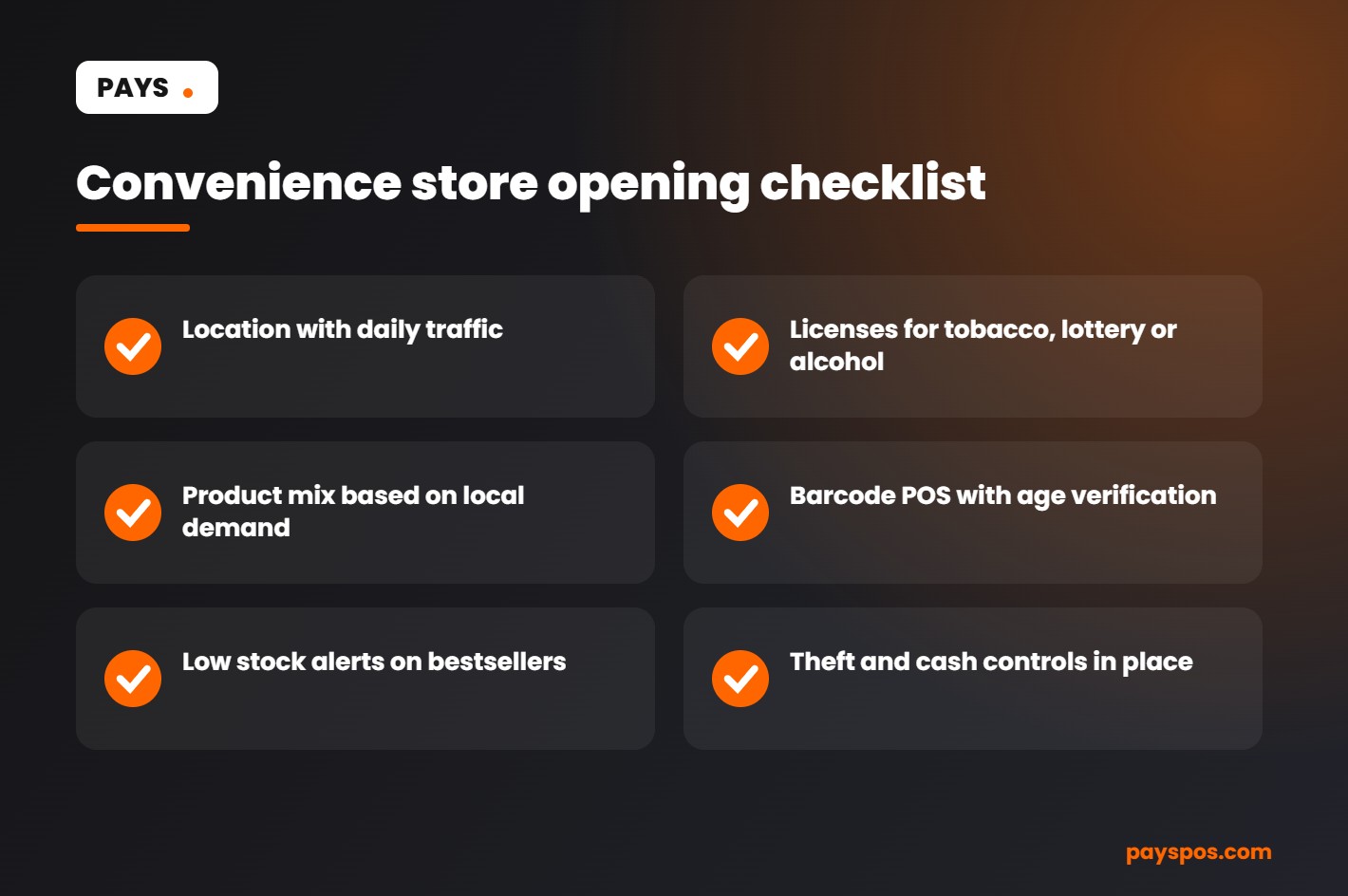
- Location with steady daily traffic
- Licenses for every product category you sell
- Product mix based on local demand
- Barcode POS with age verification
- Low stock alerts on bestsellers
- Theft prevention and cash controls in place
Frequently Asked Questions
Is a convenience store business profitable?
It can be, with the right location, a smart product mix, careful pricing and tight inventory and theft controls.
What licenses does a convenience store need?
Usually a business license, sales tax permit and food retail permit, plus separate licenses for tobacco, alcohol or lottery where applicable.
What is the best POS for a convenience store?
Look for barcode scanning, age verification, inventory with low stock alerts, purchase orders and fast payments. Pays POS includes all of these.
How can I reduce theft in my store?
Keep high-value items near the register, use cameras, keep aisles visible, give each employee their own POS login and review voids and refunds.
How much does it cost to open a convenience store business?
It varies widely by size, format and location. Refrigeration, build-out, opening inventory and fuel equipment (if any) are usually the biggest costs.
Should I buy an existing convenience store or start a new one?
Buying can provide existing customers and sales history. Starting new gives you full control over location and layout. Review financials and leases carefully either way.
How many employees does a convenience store need?
It depends on hours and traffic. Many small stores run with one or two people per shift, adding staff during morning and evening peaks. Your POS sales by hour show where extra help pays off.
What sells best in a convenience store?
Beverages, snacks, coffee and prepared food are common bestsellers, along with everyday essentials. Your own sales reports are the best guide, because demand varies by neighborhood.
How do I compete with big chain stores?
Focus on what chains can’t easily match: friendly service, local products, a convenient location and a fast, reliable checkout.
How long does it take to open a convenience store?
Many owners take a few months from signing a lease to opening, depending on build-out, refrigeration installation and licensing timelines. Licenses for age-restricted products can take the longest, so apply early.
Do convenience stores need a special POS?
A retail POS with barcode scanning, age verification, inventory and fast payments covers what most stores need.
Fast Checkout, Full Shelves
A convenience store business wins by being close, open and quick. Get the location, product mix and checkout right, and customers will keep coming back.
See how Pays POS for convenience and grocery stores works, or talk to our team.