How the Menu Engineering Matrix Can Transform Your Restaurant Profits
Ever wonder why some dishes on your menu fly off the shelves while others sit untouched? You might assume it’s just taste or luck, but the truth is there’s a method behind the madness, and it’s called the Menu Engineering Matrix.
This powerful tool helps you see exactly which dishes are making you the most money, which ones need a push, and which are quietly costing you profits. By understanding the relationship between popularity and profitability, you can make smarter decisions about pricing, placement, and promotion.
Imagine knowing which menu items to highlight, which ones to tweak, and which ones to remove, all backed by data instead of guesswork. With the Menu Engineering Matrix, you’re not just guessing what your customers will order, you’re strategically guiding them toward dishes that grow your profits.
In this guide, you’ll learn how to identify your menu’s Stars, Puzzles, Plowhorses, and Dogs, and take actionable steps to transform your restaurant profits.
What Is the Menu Engineering Matrix?
The Menu Engineering Matrix is a simple yet powerful framework that lets you analyze every item on your menu based on two key factors:
- Popularity – How often your customers order an item.
- Profitability – How much money each item contributes to your bottom line.
Think of it as a map for your menu. Instead of guessing what will sell, you can see exactly where your money is coming from and make data-driven decisions to increase revenue.
The Four Menu Categories Explained
Once you map your dishes on the Menu Engineering Matrix, you’ll see them fall into four categories. Each category gives you a clear idea of what to do to boost sales and profits.
Stars
Stars are your best-performing items, they’re high in both popularity and profitability. These are the dishes your customers love and that bring in the most profit.
- Your move: Make sure these items stand out on your menu. Use visuals, premium placement, or highlight them as “Chef’s Special” to keep sales strong.
- Tip: Consider bundling stars with other items to increase overall ticket size.
Puzzles
Puzzles are high-profit but low-popularity items. These dishes have the potential to earn more but aren’t getting the attention they deserve.
- Your move: Experiment with repositioning on the menu, updating the description, or pairing them with popular items to increase orders.
- Tip: Use menu psychology, highlight flavors, ingredients, or unique features that make these dishes irresistible.
Plowhorses
Plowhorses are high-popularity but low-profit items. Customers love them, but they don’t bring in much revenue.
- Your move: Look for ways to increase profitability, adjust portion size, tweak ingredients, or slightly raise prices without upsetting your customers.
- Tip: Promote them strategically as part of combos or specials to maintain popularity while boosting margins.
Dogs
Dogs are low-profit and low-popularity items. They drain resources and take up valuable menu space.
- Your move: Consider removing them or reworking the recipe and pricing. Don’t let these items weigh down your profits.
- Tip: If a dog has sentimental value or niche appeal, reposition it carefully rather than keeping it in a low-performing spot.
Also Read: Rethink Your Retail POS This New Year for Smarter Operations and Growth
How the Menu Engineering Matrix Boosts Profits
Using the Menu Engineering Matrix isn’t just a theoretical exercise, it directly impacts your bottom line when you apply it thoughtfully. When you understand which items are Stars, Puzzles, Plowhorses, and Dogs, you gain actionable insights to drive revenue, control costs, and guide customer choices. Here’s how:
1. Identify Hidden Profit Opportunities
Some of your menu items may be quietly generating more profit than you realize. By categorizing items, you’ll spot high-profit Puzzles that are underperforming in sales. Once you reposition or promote them, you can turn these overlooked dishes into real money-makers.
2. Reduce Waste and Low-Performing Items
Dogs don’t just underperform, they waste ingredients, staff time, and menu space. Removing or reworking these items frees up resources for dishes that actually sell and profit, improving efficiency and lowering food costs.
3. Highlight Items That Drive Both Sales and Margins
Stars are your goldmine. By giving them prominence, through menu placement, descriptive language, and visuals, you guide your customers toward choices that satisfy them and maximize your profits. Strategic placement can increase sales of Stars by 10–15% or more.
4. Encourage Menu Redesign Based on Data, Not Guesswork
Many restaurants rely on intuition when designing menus, but the Matrix lets you make informed decisions. You’ll know exactly which items to push, which to tweak, and which to remove, creating a menu that’s optimized for both customer satisfaction and profitability.
5. Optimize Pricing and Portions Strategically
For Plowhorses, small tweaks, like slightly adjusting the portion size or price, can transform a popular but low-profit dish into a healthy contributor to your revenue. Conversely, identifying Puzzles allows you to experiment with pricing or presentation to make them more appealing.
6. Boost Overall Customer Experience
When your menu is strategically engineered, your customers enjoy clarity and guidance. Highlighting popular, high-margin items ensures they find the dishes they’ll love, while you maintain a menu that’s visually appealing and easy to navigate. A better experience encourages repeat visits and larger orders.
In short, the Menu Engineering Matrix gives you a step-by-step roadmap for turning every dish into either a revenue driver or a learning opportunity. It’s not just about analyzing numbers, it’s about making your menu work harder for you.
Steps to Implement Menu Engineering in Your Restaurant
Applying the Menu Engineering Matrix might sound intimidating at first, but when you break it down, it’s a straightforward process you can start today. Follow these steps to turn your menu into a profit-driving tool:
Step 1: Collect Sales and Cost Data
Before you can categorize your dishes, you need accurate numbers. Gather data on:
- Number of each dish sold over a set period (weekly or monthly).
- Cost of ingredients for each menu item.
- Price charged per item.
This gives you the foundation to calculate profitability and popularity.
Step 2: Calculate Contribution Margins
For each dish, subtract the cost of ingredients from the menu price to get the contribution margin. This tells you how much each dish contributes to your profit.
Step 3: Map Items on the Matrix
Use your popularity and profitability numbers to place each dish in the Menu Engineering Matrix:
- High popularity & high profitability → Star
- Low popularity & high profitability → Puzzle
- High popularity & low profitability → Plowhorse
- Low popularity & low profitability → Dog
Step 4: Categorize Items
Once plotted, clearly label each dish as a Star, Puzzle, Plowhorse, or Dog. This visual snapshot helps you see where your menu is strong and where it’s leaking profits.
Step 5: Apply Strategic Changes
Now comes the action:
- Stars: Highlight, promote, and keep them in prime menu positions.
- Puzzles: Reposition, redesign, or market them better to increase sales.
- Plowhorses: Adjust portion sizes or pricing to improve margins.
- Dogs: Remove or reinvent, freeing up space and resources.
Step 6: Monitor and Adjust Regularly
Your menu isn’t static, customer preferences, ingredient costs, and trends change. Review your matrix monthly or quarterly to ensure your menu continues to maximize profits.
Step 7: Utilize Technology
Using a modern POS system or analytics platform can automate much of this work, tracking sales, costs, and margins in real-time. This makes updating your matrix faster and more accurate, letting you focus on menu strategy instead of spreadsheets.
By following these steps, you’re not guessing anymore, you’re making data-driven decisions that improve revenue, reduce waste, and delight your customers.
Also Read: What Most Business Owners Get Wrong About Point of Sale Systems
How Technology Can Make Menu Engineering Easier
You don’t have to rely on manual calculations or guesswork to implement the Menu Engineering Matrix. With the right technology, you can streamline data collection, analysis, and decision-making, saving time and increasing accuracy.
1. Real-Time Sales Tracking
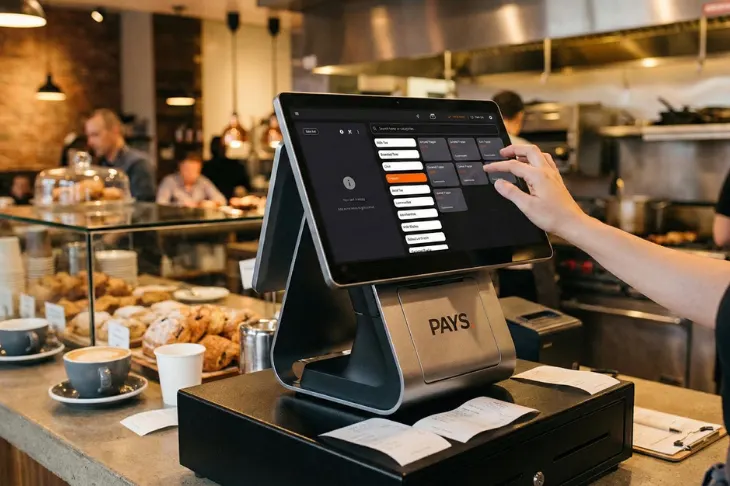
A modern POS system like PAYS automatically tracks every order, giving you instant insight into which dishes are selling the most. You’ll know your Stars, Puzzles, Plowhorses, and Dogs without waiting for monthly reports.
2. Profitability Analysis Made Simple
PAYS can calculate contribution margins for every item by factoring in ingredient costs and menu prices. This eliminates tedious spreadsheets and helps you see exactly how much each dish contributes to your bottom line.
3. Quick Menu Adjustments
Once you identify underperforming dishes, technology lets you update menus instantly, from repositioning items digitally on digital menus to adjusting pricing. You can experiment with Puzzles or Plowhorses in real-time and measure the impact immediately.
4. Automated Reporting and Insights
PAYS provides dashboards and reports that summarize your menu’s performance at a glance. You can track trends over time, compare categories, and spot opportunities to boost profits without digging through raw data.
5. Data-Driven Promotions
Technology allows you to promote Stars and Puzzles strategically, through app notifications, digital menus, or combo offers, guiding customers toward profitable choices effortlessly.
With the point of sales system like PAYS, you make menu engineering less about guesswork and more about smart, data-driven decisions. It turns your menu into a living, breathing tool that constantly adapts to maximize profitability while keeping your customers happy.
Also Read: Why Manage Multiple Systems When One Online Point of Sale Can Handle Everything?
How PAYS Helps You Optimize Your Menu
Implementing the Menu Engineering Matrix is easier, and more effective, when you use a smart, AI-powered POS system like PAYS. Here’s how it helps you turn data into profit:
1. Track Popularity and Profitability Instantly
With PAYS, every order is automatically logged, so you always know which items are selling and which are earning the most. You don’t have to manually track sales or margins, your matrix updates in real time.
2. Identify Stars, Puzzles, Plowhorses, and Dogs Effortlessly
PAYS can categorize your menu items for you. You’ll immediately see:
- Stars: Best-sellers making you the most money
- Puzzles: High-profit items that need a boost
- Plowhorses: Popular items eating into your margins
- Dogs: Low-performing items dragging down profits
This lets you make data-driven decisions instead of relying on guesswork.
3. Experiment and Adjust in Real Time
Want to reposition a Puzzle or tweak a Plowhorse? PAYS lets you update menu items, pricing, and promotions instantly, then track the results. You’ll know what works, and what doesn’t, without waiting weeks to analyze spreadsheets.
4. Actionable Insights and Reports
PAYS provides clear dashboards and reports that highlight opportunities to increase revenue, reduce waste, and optimize menu layout. You can see trends, compare items, and make smarter decisions quickly.
5. Boost Sales and Customer Satisfaction Simultaneously
By highlighting Stars and strategically promoting Puzzles, PAYS helps you guide customers toward high-margin dishes, improving profits while giving diners the experience they want.
In short, PAYS doesn’t just collect data, it turns your menu into a profit-maximizing machine, giving you the tools to implement the Menu Engineering Matrix with confidence and ease. (Check out: Online Ordering & Websites)
The Menu Engineering Matrix isn’t just a framework, it’s your roadmap to smarter, more profitable menu decisions. By identifying Stars, Puzzles, Plowhorses, and Dogs, you gain clarity on what drives your profits and what drains them.
When you pair this strategy with a system like PAYS, you remove the guesswork entirely. You can track popularity and profitability in real-time, experiment with menu changes, and make data-driven adjustments that increase revenue, reduce waste, and delight your customers.
Now is the time to take control of your menu. Stop guessing what will sell and start making every dish work harder for your bottom line.
Take control of your menu and maximize your profits today!
With PAYS, you can easily see which dishes are your Stars, boost underperforming Puzzles, and make smarter menu decisions, all in real time. Don’t let guesswork dictate your revenue; turn your menu into a powerful profit engine with PAYS.
Start optimizing your menu now and watch your restaurant thrive! Schedule a demo now.
FAQs
PAYS automatically tracks item sales and profitability, helping you identify Stars, Puzzles, Plowhorses, and Dogs without manual calculations. You get clear insights that make menu optimization faster and more accurate.
Yes. PAYS provides real-time visibility into contribution margins and sales performance, so you always know which dishes are driving profits and which ones need attention.
Not at all. PAYS is designed for ease of use, with intuitive dashboards and reports that turn complex data into simple, actionable insights for restaurant owners and managers.
Absolutely. PAYS helps you spot high-profit items that aren’t selling well, so you can experiment with pricing, placement, or promotions and measure results instantly.
Yes. PAYS scales with your business, making it ideal for single-location restaurants, food trucks, and multi-location operations looking to boost profits through smarter menu decisions.