

Weddings, office lunches, birthday parties, graduations, fundraisers and holiday parties all have one thing in common: people need to eat. That steady demand is why so many cooks and restaurant owners dream of starting a catering business.
Catering can be rewarding and profitable. Orders are planned ahead, food cost is easier to predict and a single event can bring in as much as several busy nights in a restaurant. It also demands strong planning, careful food safety and the ability to perform under pressure at someone else’s venue.
This guide covers 12 essential steps to start a catering business, plus the pricing, staffing and tools that help small caterers grow into trusted names in their community.
Catering Business at a Glance
- A catering business sells events and orders in advance, which makes food cost easier to plan.
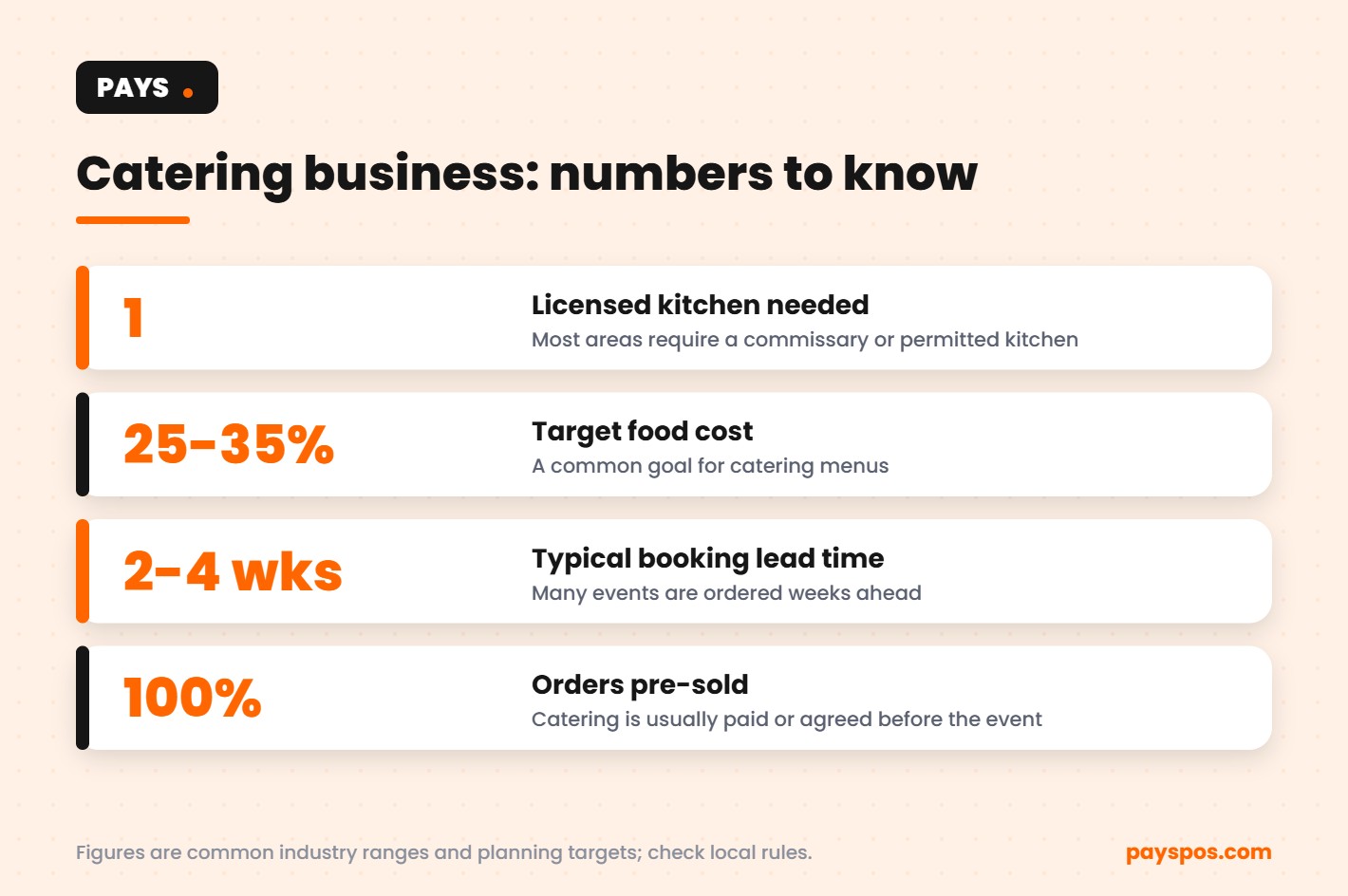
- Most areas require a catering business to cook in a licensed kitchen.
- Deposits, clear policies and written event sheets protect every catering business.
- Online ordering and card payments make it easier for clients to book your catering business.
Is a Catering Business Right for You?
A catering business suits people who love cooking for groups, enjoy planning and stay calm when plans change. Unlike a restaurant, you rarely serve walk-in customers. Instead, you sell events and orders in advance, then deliver an experience on a specific day at a specific time.
The schedule can be uneven. Some weeks are packed with weddings and corporate events, while others are quiet. Weekends and holidays are often the busiest. If you want predictable hours, consider focusing on weekday corporate catering, which tends to be steadier.
The rewards include higher average orders, less food waste because you cook to a known headcount and the chance to be part of important moments in people’s lives.
Step 1: Choose Your Catering Niche
A clear niche makes marketing easier and helps clients remember you. Common catering business niches include:
- Corporate catering: breakfasts, lunches and meetings for offices.
- Wedding catering: full-service meals, plated dinners and buffets.
- Private parties: birthdays, anniversaries and family celebrations.
- Drop-off catering: trays and boxed meals delivered ready to serve.
- Specialty catering: a specific cuisine, dietary focus or style such as barbecue or grazing tables.
- Restaurant catering: an existing restaurant adding catering to its menu.
Many successful caterers start with one niche, build a reputation and then expand.
Step 2: Write a Catering Business Plan
Your plan should cover your niche, ideal clients, competitors, sample menus, pricing approach, staffing, equipment, startup costs and a realistic booking forecast. Note your busy and slow seasons and how you’ll cover costs during quiet months.
Look at local competitors’ menus, prices, reviews and minimum order sizes. Your catering business needs a clear reason for clients to choose you, such as a unique cuisine, flexible menus, better communication or reliable on-time delivery.
Step 3: Secure a Licensed Kitchen
In most places, a catering business must prepare food in a licensed commercial kitchen. Many areas do not allow catering from a regular home kitchen. For example, King County Public Health requires caterers to operate from an approved commissary kitchen.
Your options include renting time in a shared commissary kitchen, partnering with a restaurant that has spare kitchen hours, leasing your own space or using your existing restaurant kitchen. Check your local rules early, because your kitchen choice affects your permit.
Step 4: Get Licensed and Insured
Requirements vary by city, county and state, but a catering business commonly needs a business license, a catering or food service permit from the health department, food manager and food handler certifications and general liability insurance. Serving alcohol usually requires a separate license or a partner who holds one.
Keep copies of every permit and certificate in one folder. Venues and corporate clients often ask for proof of insurance before booking you.
Step 5: Build Sample Menus
Create a few sample menus at different price levels, such as a simple drop-off lunch, a mid-range buffet and a premium plated dinner. Clients find it easier to choose from packages than to build a menu from scratch.
Choose dishes that hold well, travel safely and can be made in large batches without losing quality. Offer clear options for common dietary needs such as vegetarian, vegan and gluten-free. Note allergens on every menu.
Step 6: Price Every Event for Profit
Catering pricing should cover food, packaging or rentals, labor for cooking and service, transport, overhead and profit. Many caterers aim to keep food cost around 25 to 35 percent of the food price, though targets vary by style.
Common pricing methods include per-person pricing for buffets and plated meals, per-tray pricing for drop-off orders and a separate service fee for staff at full-service events. Be clear about what’s included, such as setup, serving staff, plates and cleanup.
Collect a deposit to secure the date and set a clear deadline for final headcount and payment. Spell out your cancellation policy in writing. Card fees add up on large orders, so some caterers use dual pricing, showing a cash price and a card price, where card brand rules and local law allow it.
Step 7: Get the Right Equipment
A catering business needs equipment to cook, hold, transport and serve food safely:
- Insulated food carriers and hot and cold holding boxes
- Chafing dishes, fuel and serving utensils
- Coolers, ice packs and food thermometers
- Hotel pans, sheet pans and lids
- Folding tables, linens and display risers
- A reliable vehicle for deliveries
- Card readers and a POS for orders and payments
Rent large or rarely used items, such as tents and specialty serveware, until you’re sure you need to own them.
Step 8: Make Ordering Easy
Clients want to order quickly, see clear prices and know their order is confirmed. Add catering packages to your website with online ordering so offices and families can place drop-off orders and choose a pickup or delivery time.
For larger events, use a simple inquiry form that collects the date, location, headcount, budget, style of service and dietary needs. Respond within one business day. Fast replies often win the booking.
Step 9: Hire and Train Your Team
You’ll need cooks, drivers and, for full-service events, servers and an event lead. Many caterers build a pool of reliable part-time staff they call for events. Train everyone on food safety, setup standards, guest service, allergen questions and cleanup.
Create an event-day checklist covering what to load, when to leave, how to set up and how to pack down. A written checklist prevents the classic catering mistake: arriving without serving spoons.
Step 10: Plan Every Event in Detail
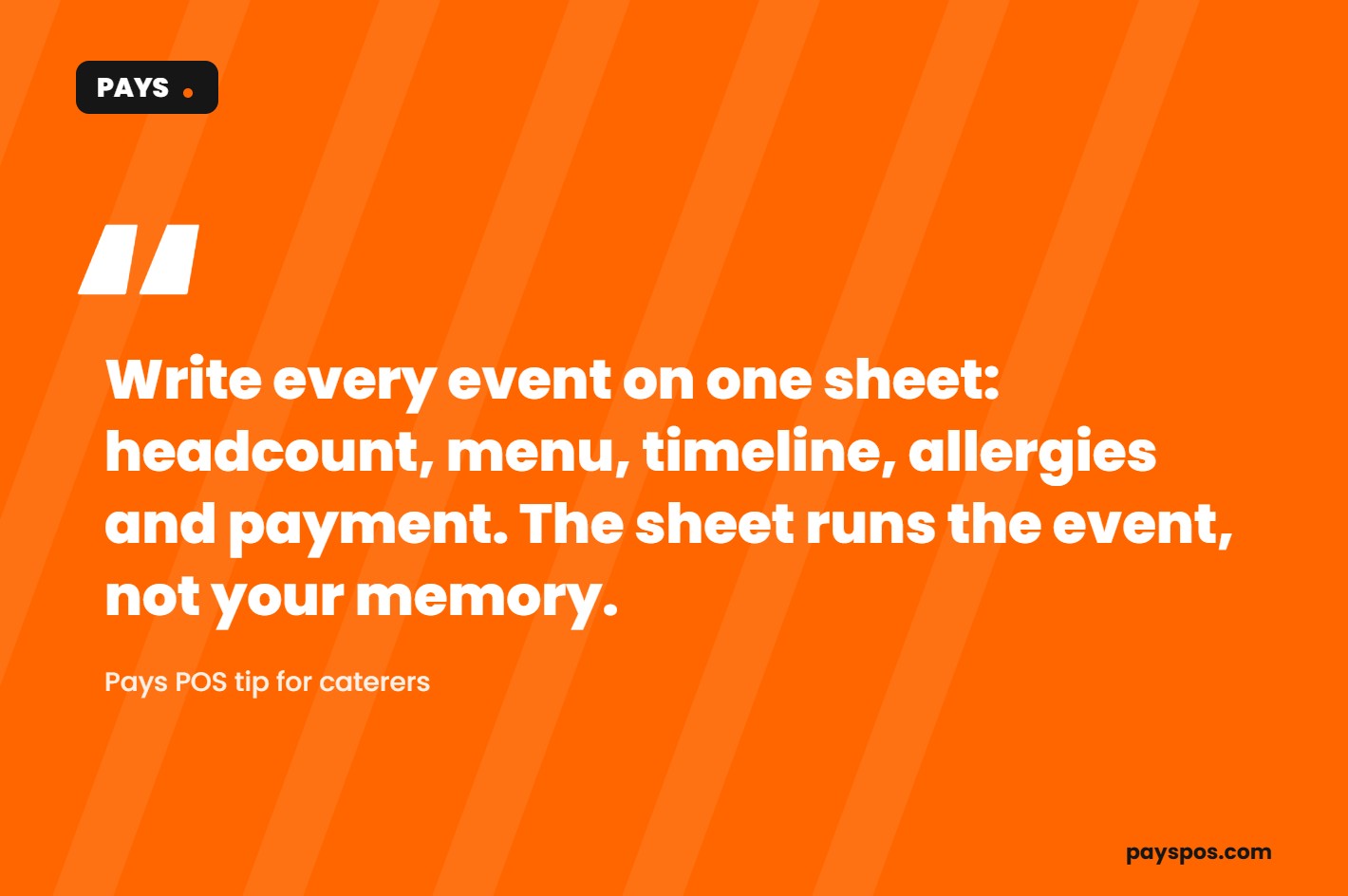
Every event should have one event sheet with the date, timeline, address, contact person, headcount, menu, quantities, dietary notes, equipment list, staff schedule and payment status. Share it with the whole team ahead of time.
Build in buffer time for traffic, venue access and setup. Arrive early, confirm the serving area with the venue and keep food at safe temperatures from your kitchen to the last plate.
Step 11: Market Your Catering Business
Great food photography and real client reviews are your strongest marketing tools. Post photos of setups and dishes, share short videos of events and ask happy clients for reviews and referrals.
Build relationships with event planners, venues, office managers and wedding vendors. Offer tasting sessions for larger events. Drop off sample boxes at nearby offices with a menu and a discount for their first order.
Step 12: Track Your Numbers
Review your catering business numbers every month:
- Revenue by event type and client
- Food cost and labor cost per event
- Average order size
- Repeat clients and referral sources
- Inquiries compared with booked events
Real-time reports in your POS show which packages sell, which clients order most often and where your margins are strongest.
Adding Catering to an Existing Restaurant
If you already run a restaurant, catering can be a powerful second revenue stream. You already have a licensed kitchen, staff and a menu people know. Start with drop-off trays of your best sellers, then add larger packages once you understand the workload.
Schedule catering prep during slower restaurant hours so it doesn’t disrupt dine-in service. Use your POS to keep catering orders separate in your reports, so you can see exactly how much the program adds.
Food Safety on the Move
Food safety is more challenging in catering because food leaves your kitchen. Keep hot food hot and cold food cold during transport and service, check temperatures with a thermometer and follow time limits for food held at room temperature. The FDA Food Code is a useful reference, and your local health department sets the rules you must follow.
Catering Business Launch Checklist
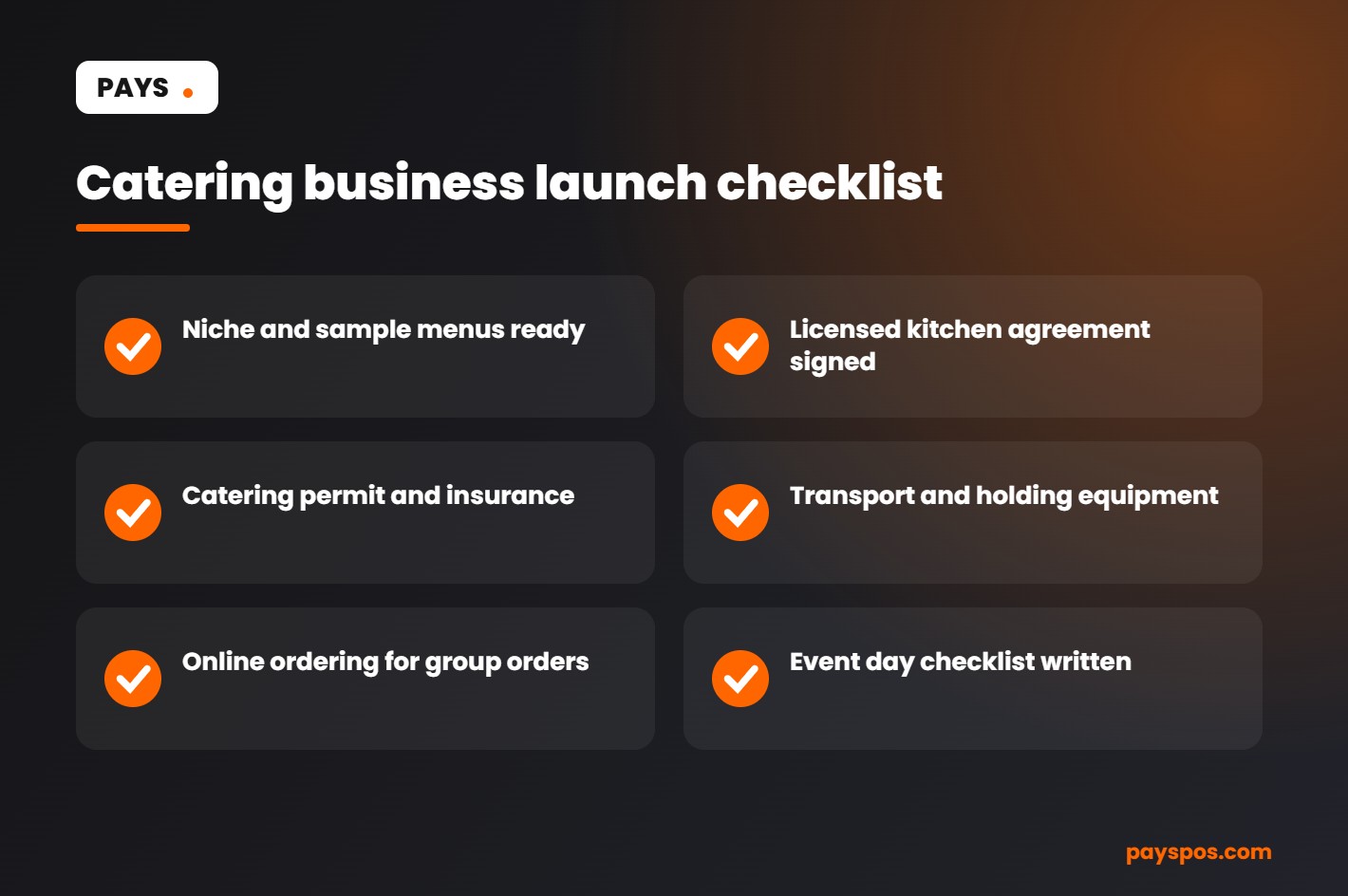
- A clear niche and two or three sample menus
- A licensed kitchen and a signed kitchen agreement
- Business license, catering permit and certifications
- General liability insurance
- Transport and holding equipment
- Online ordering and a simple inquiry form
- Written deposit, payment and cancellation policies
- An event sheet template and event-day checklist
Common Catering Business Mistakes
- Underpricing labor: forgetting setup, travel and cleanup time.
- No deposits: losing money on last-minute cancellations.
- Too many custom menus: every event becomes a new project.
- Weak communication: slow replies that lose bookings.
- Poor temperature control: food safety risks at the venue.
- No follow-up: missing the chance for repeat orders and reviews.
Catering Business Models Compared
Each catering business model has its own rhythm. Drop-off catering is the simplest to start: you cook, pack, deliver and leave. It needs fewer staff and less equipment, and it works well for offices and small parties. The trade-off is lower average order size and stronger competition from restaurants.
Full-service catering includes setup, serving staff and cleanup. Orders are larger and margins can be strong, but you need more people, more equipment and careful coordination with venues. Weddings and large private events usually fall into this category.
Corporate catering sits between the two. Weekday breakfasts and lunches create steady repeat business, and office managers who trust you often order every week. Many caterers use corporate orders to keep the kitchen busy between weekend events.
Building Repeat Clients
The most profitable catering business is one where clients come back. After every event, send a thank-you note, ask for feedback and request a review. Keep simple notes on each client, such as favorite dishes, dietary needs and the size of their usual order.
Reach out before the moments that matter to them: an office’s quarterly meeting, a family’s annual holiday party or a school’s graduation season. A short reminder with a suggested menu often turns into a booking.
Reward loyalty with small perks, such as a free dessert tray on their fifth order or priority booking during busy seasons. These touches cost little and build relationships that last for years.
Managing Busy Seasons
Most caterers have clear peaks: wedding season, graduation season and the holidays. Plan for them months ahead. Lock in extra staff, confirm kitchen time, order disposables and rentals early and set a maximum number of events per day so quality never slips.
It’s tempting to accept every booking in peak season. A catering business grows faster by delivering every event well than by squeezing in one more event that stretches the team too thin. Use a waitlist or refer extra work to a trusted partner when you’re full.
Handling Last-Minute Changes
Headcounts change, venues move setup times and guests arrive with dietary needs nobody mentioned. Build flexibility into your process. Set a final headcount deadline, prepare a small buffer of extra portions and keep a few simple dishes ready for unexpected dietary requests.
Put your change policy in writing. Explain how late changes affect price and what you can and can’t accommodate after the deadline. Clear rules protect your margins and keep conversations friendly.
Using Technology to Save Time
Many small caterers still manage orders through texts, emails and paper notes. That works for a few events a month but quickly becomes risky as you grow. One missed message can mean a missing tray at a client’s event.
A POS with online ordering puts every catering order in one place with the date, time, items and payment status. Card payments are fast, and reports show your best-selling packages and busiest weeks. With all orders organized, your catering business can take on more events without adding more office work.
A Day in Your Catering Business
A typical event day starts early in the kitchen. The team checks the event sheet, preps and cooks in the planned order and portions food into labeled pans. Hot items go into insulated carriers, cold items into coolers with ice packs and the equipment list is checked twice before the van is loaded.
On site, the event lead confirms the layout with the venue, sets up tables and chafing dishes, checks food temperatures and briefs the serving staff. During service, the team refills trays, answers guest questions about ingredients and keeps the buffet neat.
After the event, staff pack down, clean the area and load equipment back into the van. Back at the kitchen, they wash and store everything, record leftovers and waste and mark the event complete. The owner then sends a thank-you message, confirms final payment and notes lessons for next time.
Writing Clear Catering Proposals
For larger events, a short written proposal helps clients say yes. Include the date, venue, headcount, menu, service style, staff, rentals, timeline, total price, deposit amount and payment schedule. Add photos of similar events and a few client reviews.
Keep the proposal simple and easy to scan. Offer two or three options at different price points rather than one take-it-or-leave-it quote. Many clients choose the middle option, and your catering business benefits from a higher average order.
Working With Venues and Planners
Venues and event planners can send you a steady stream of referrals. Visit local venues, learn their kitchen access rules, loading areas and setup times, and leave a menu and business card. Deliver a sample tray to their team.
When you work an event, be the vendor planners love: arrive on time, follow the venue’s rules, communicate clearly and leave the space spotless. A reputation for reliability spreads quickly among planners and venue managers.
Frequently Asked Questions
Can I start a catering business from home?
It depends on where you live. Many areas require caterers to use a licensed commercial or commissary kitchen. Check with your local health department before you start.
How much does it cost to start a catering business?
Costs depend on your niche and kitchen setup. Renting a shared kitchen and starting with drop-off catering keeps costs lower than leasing your own space and buying full-service equipment.
How do caterers price their services?
Most use per-person or per-tray pricing that covers food, labor, transport, overhead and profit, plus service fees for staffed events.
What tools does a catering business need?
A POS with online ordering, card payments, menu management and real-time reports helps you take orders, collect payments and track profit by event.
Start small, deliver every order on time and let happy clients spread the word. Each well-run event makes the next booking for your catering business a little easier to win.
Cater to Success
A catering business rewards careful planners who cook with care and communicate clearly. Choose your niche, secure a licensed kitchen, price every event for profit and make ordering easy.
See how the Pays POS handles orders and payments or talk to our team. We’ll build your menu and get you live in under a week, with no long-term contract.