

Few businesses make people as happy as an ice cream shop. Kids press their noses against the dipping cabinet, couples share a sundae after dinner and whole sports teams pile in after a win. It feels like the easiest way to make a living from joy.
It’s also a business with real challenges. An ice cream shop business lives with a big seasonal swing, long summer lines, expensive freezers and products that melt if you get the details wrong. The owners who last treat the shop as both a craft and a carefully run operation.
This guide walks you through 12 essential steps to open and grow an ice cream shop business, from choosing your concept to pricing every scoop and keeping sales alive when the weather turns cold.
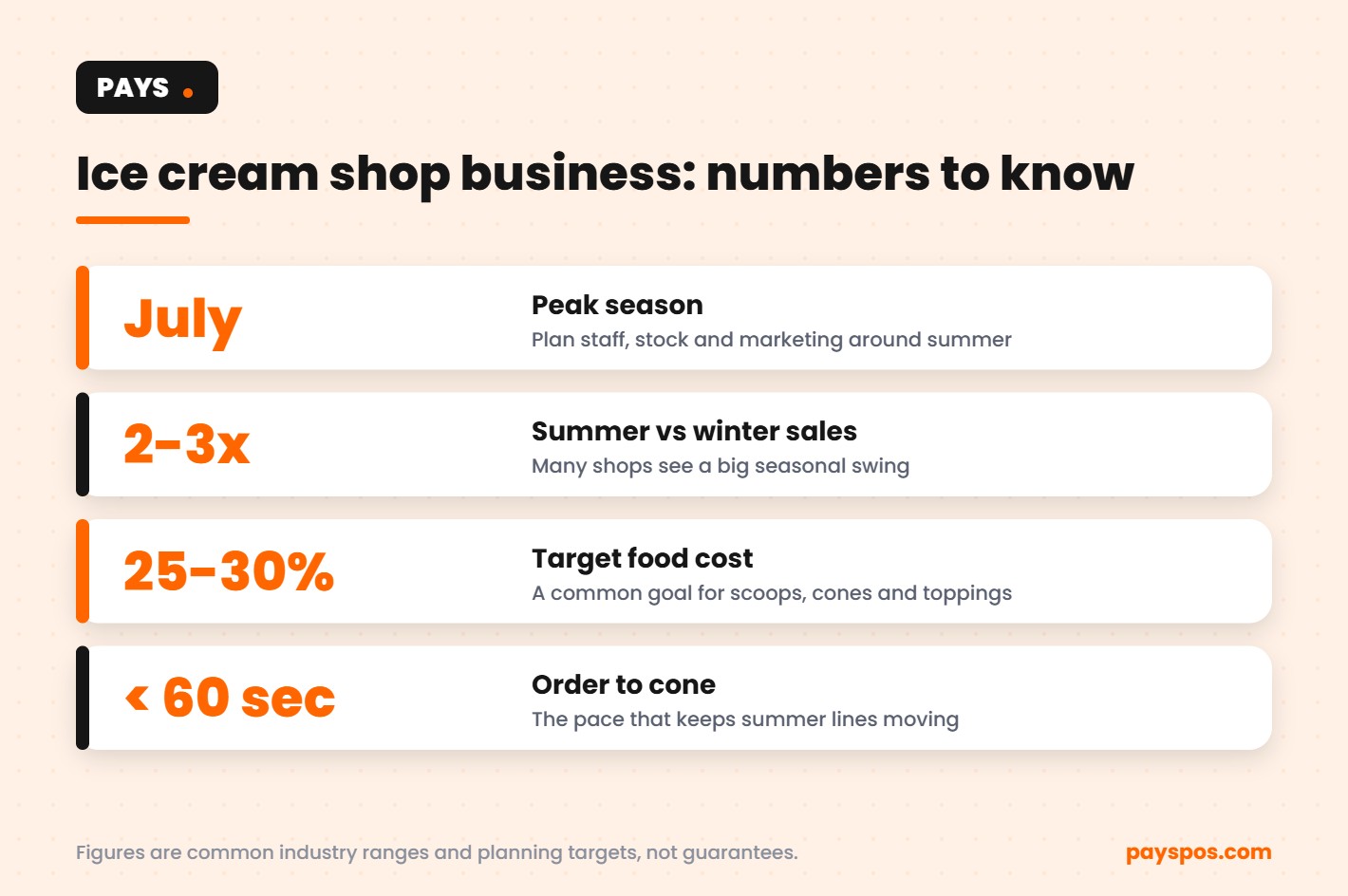
Ice Cream Shop Business at a Glance
- An ice cream shop business earns most of its sales in warm months, so plan cash flow for winter.
- Portion control and add-ons decide how profitable an ice cream shop business is.
- Fast service on summer evenings keeps lines moving and guests coming back.
- The right POS gives an ice cream shop business kiosks, online ordering and real-time reports.
Is an Ice Cream Shop Business Right for You?
Before you sign a lease, be honest about the work. Most scoop shops do the bulk of their sales in the warm months, often in the evenings and on weekends. That means late nights in summer, slower days in winter and a constant focus on keeping freezers, staff and stock in balance.
An ice cream shop business suits owners who enjoy people, can handle a rush with a smile and like the idea of building a neighborhood tradition. It also suits people who are comfortable with numbers, because small differences in portion size and pricing decide whether a summer is profitable.
The upside is real. Ice cream has broad appeal across ages, a strong emotional connection and plenty of room for creativity. Shops with a clear identity can build loyal regulars who visit every week of the season.
Step 1: Choose Your Ice Cream Shop Concept
Your concept shapes your menu, equipment, staffing and budget. Common options include:
- Classic scoop shop: hard ice cream in cups and cones, sundaes, shakes and a simple topping bar.
- Small-batch creamery: house-made flavors, seasonal specials and a premium price point.
- Soft serve and frozen yogurt: machines instead of dipping cabinets, with fast service and lots of toppings.
- Dessert bar: ice cream combined with waffles, crepes, cookies or cakes for a bigger ticket.
- Kiosk or cart: a small footprint in a mall, park or tourist area with a short menu.
Pick the format that fits your skills and your market. A small-batch creamery needs production space and know-how. A soft serve shop needs reliable machines and strict cleaning routines. A kiosk keeps costs low but limits your menu.
Step 2: Write an Ice Cream Shop Business Plan
A business plan forces you to turn a dream into numbers. It should cover your concept, target customers, competitors, menu, pricing, staffing, startup costs and a month-by-month sales forecast that reflects the seasons.
That last part matters more for an ice cream shop business than for most food businesses. A plan that assumes the same sales every month will fail the first winter. Build three scenarios, a slow year, an expected year and a strong year, and make sure you can pay rent and payroll in the slow one.
Industry groups such as the International Dairy Foods Association publish useful research on flavors, consumer habits and seasonal trends that can help you sharpen your assumptions.
Step 3: Find a Location With the Right Foot Traffic
Location can make or break an ice cream shop business. Look for:
- Evening and weekend traffic: near restaurants, parks, cinemas, beaches or busy main streets.
- Families and students: close to schools, youth sports fields and residential neighborhoods.
- Visibility: a storefront people see on their walk to dinner, with room for a line outside.
- Parking or walkability: ice cream is an impulse buy, so make it easy to stop.
- Seating: a few tables inside and out turn a quick purchase into a visit.
Spend time at a potential site at 8 p.m. on a summer Saturday and at 3 p.m. on a winter Tuesday. Both visits will tell you something.
Step 4: Handle Licenses, Permits and Food Safety
An ice cream shop business usually needs a business license, a health department food permit, a sales tax registration and food handler certifications for staff. If you make your own ice cream, your state may treat you as a dairy manufacturer, with extra rules about pasteurized mix and production.
Contact your local health department early. Ask about requirements for hand sinks, dipper wells, freezer temperatures and cleaning schedules for soft serve machines. Getting this right before construction saves money and delays.
Step 5: Choose Your Equipment
Ice cream equipment is expensive and essential. A typical shop needs:
- Dipping cabinets to display and serve flavors
- A walk-in or reach-in freezer for backup tubs
- Soft serve or batch freezers if you make your own product
- Dipper wells, scoops, scales and topping stations
- Blenders for shakes and a refrigerator for toppings and dairy
- A POS system, card readers and receipt printers
Buy for reliability. A freezer that fails on a July weekend can cost you a full day of sales and thousands of dollars in product. Keep a maintenance plan and a technician’s number on the wall.
Step 6: Build a Focused Menu
It’s tempting to offer 40 flavors. Most successful shops do better with a focused list: core favorites people come back for, a few signature flavors only you make and rotating seasonal specials that give regulars a reason to visit again.
Fewer flavors mean less waste, faster decisions at the counter and easier inventory. Keep toppings organized and limit complicated builds during the busiest hours. A menu built for speed is one of the most valuable assets in an ice cream shop business.
Step 7: Price Every Scoop for Profit
Pricing starts with cost. Work out the cost of each item, including the ice cream by weight, the cone or cup, toppings, napkins and spoons. Many shops aim to keep food cost around 25 to 30 percent of the menu price, though your target depends on your product and market.
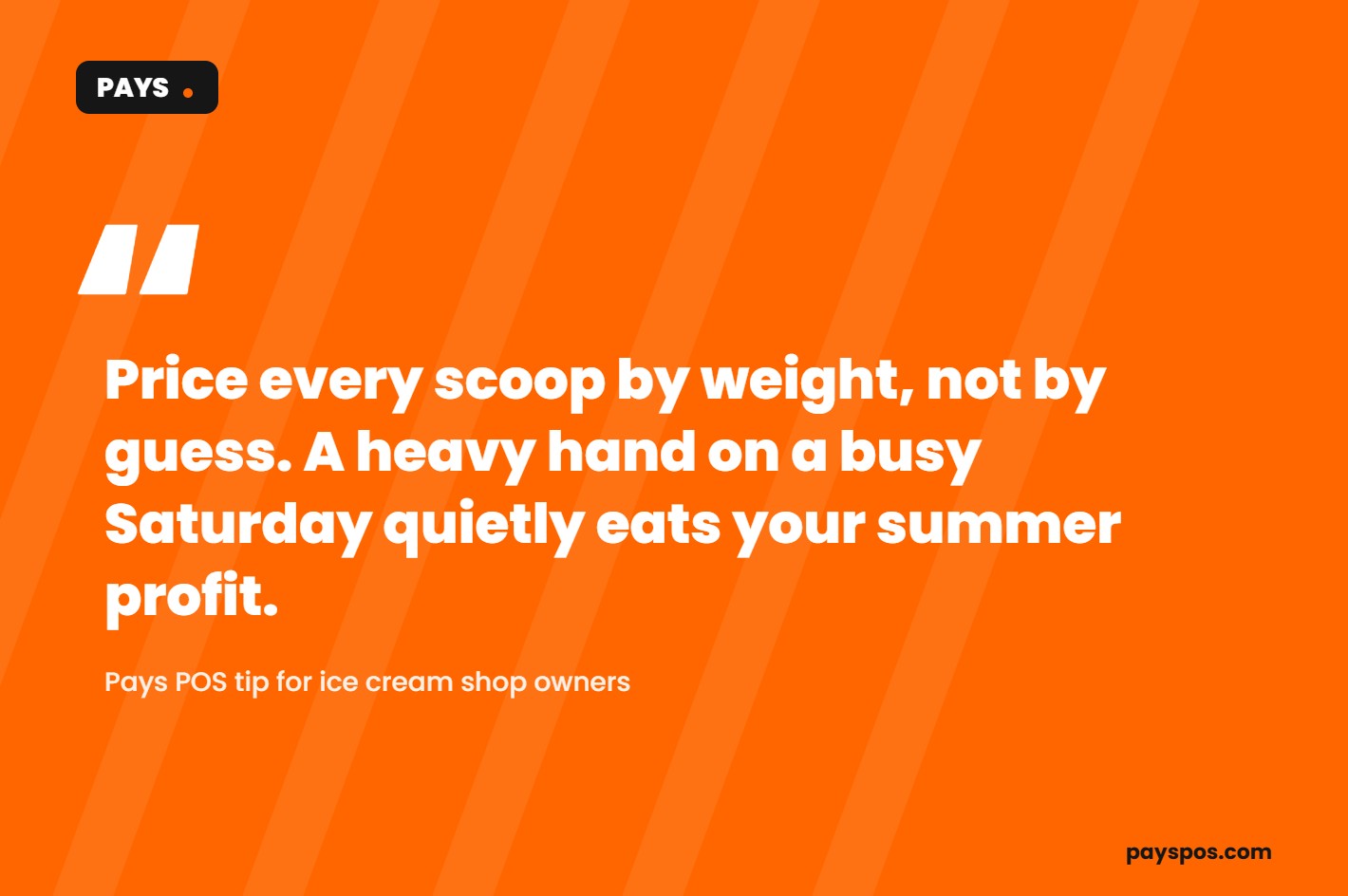
Portion control is the hidden profit driver. If the menu says one scoop is four ounces and staff routinely serve five, you are giving away a quarter of your product. Weigh scoops during training and check them again in the middle of a rush.
Card fees matter too. Every card payment costs a percentage of the sale. Some owners use dual pricing, which shows a cash price and a card price so the card price covers the cost of accepting the card. Done in line with card brand rules and local law, it can keep more of every sale in your pocket.
Step 8: Design the Shop for Summer Lines
A busy summer evening can bring a line out the door. The way you design the counter decides whether that line feels fun or frustrating.
- Put the menu where people can read it while they wait, so they’re ready to order.
- Offer tasting spoons, but set a gentle limit during peak hours.
- Separate ordering, scooping and payment so staff aren’t crossing paths.
- Add a self-order kiosk so guests can order while the line moves.
- Keep a clear pickup spot for shakes and sundaes that take longer.
Speed doesn’t mean rushing guests. It means removing the small delays that add up across a hundred orders.
Step 9: Choose a POS Built for a Busy Counter
Your point of sale system does far more than take payments. For an ice cream shop business, look for:
- Fast item builds: sizes, flavors, cones and toppings in a few taps.
- Tap to pay: cards and phones in seconds, through reliable hardware.
- Self-order kiosks: extra ordering points on busy nights.
- Online ordering: pints, quarts and ice cream cakes ready for pickup.
- Inventory tracking: low stock alerts for flavors, cones and cups.
- Real-time reports: sales by hour, by day and by flavor.
The Pays POS covers all of this. We build your menu for you, train your staff and get you live in under a week, with no long-term contract.
Step 10: Hire and Train Your Team
Most ice cream shops rely on part-time and seasonal staff, often students. Hire for friendliness and reliability first. You can teach scooping, but you can’t easily teach a warm attitude.
Training should cover portion sizes, food safety, allergen questions, cleaning routines, POS use and how to handle a long line calmly. Write it down in a short handbook so every new hire learns the same way.
Step 11: Build Buzz Before You Open
Start talking about your shop months before the doors open. Share the build-out on social media, post flavor polls and invite locals to vote on a signature flavor. Partner with nearby restaurants, schools and sports leagues.
A soft opening for friends, family and neighbors lets your team practice before the public rush. Ask for honest feedback on flavors, portions and speed.
Step 12: Track the Numbers That Matter
Once you’re open, watch a few numbers every week:
- Sales by hour and day, to schedule staff to real demand
- Average ticket and the share of orders with add-ons
- Food cost percentage and waste
- Best-selling and slowest flavors
- Labor cost as a share of sales
An ice cream shop business that reviews these numbers weekly can fix small problems before they become expensive ones.
Ice Cream Shop Business Models Compared
Each model has trade-offs. A classic scoop shop is simple to run but faces strong competition from grocery stores. A small-batch creamery commands higher prices but needs production skills and space. Soft serve shops move quickly and have lower product cost per serving, but machines need careful daily cleaning. Kiosks and carts are affordable to open, yet depend heavily on location and weather.
Some owners combine models over time, starting with a cart to test demand and opening a storefront once they have a loyal following.
Surviving the Slow Season
Winter is the test every ice cream shop business has to pass. Smart owners plan for it from day one:
- Sell pints, quarts and ice cream cakes for birthdays and holidays.
- Add warm items such as hot chocolate, coffee, waffles or baked goods.
- Offer catering for parties, weddings and office events.
- Run holiday flavors like pumpkin, peppermint and eggnog.
- Adjust hours based on real sales data rather than habit.
Online ordering is especially useful in winter. Customers who won’t stand outside in the cold will happily order a cake or a few pints for pickup.
A Day in Your Ice Cream Shop Business
A typical summer day starts before opening with temperature checks, restocking the dipping cabinets, prepping toppings and cleaning machines. The afternoon brings families and teens. The evening rush after dinner is usually the busiest stretch, often running until close.
After closing, staff clean, wrap tubs, record waste and count the drawer. The owner reviews the day’s sales, checks stock levels and places orders. Good systems make that end-of-day routine take minutes instead of hours.
Managing Inventory and Waste
Ice cream is sensitive to temperature. Tubs that soften and refreeze develop ice crystals and lose quality. Rotate stock using first in, first out, keep freezers at the right temperature and record every tub you throw away.
Inventory tracking in your POS helps here. When each sale reduces stock automatically and low stock alerts arrive in time, you reorder before you run out of a bestseller and avoid over-ordering flavors that sit.
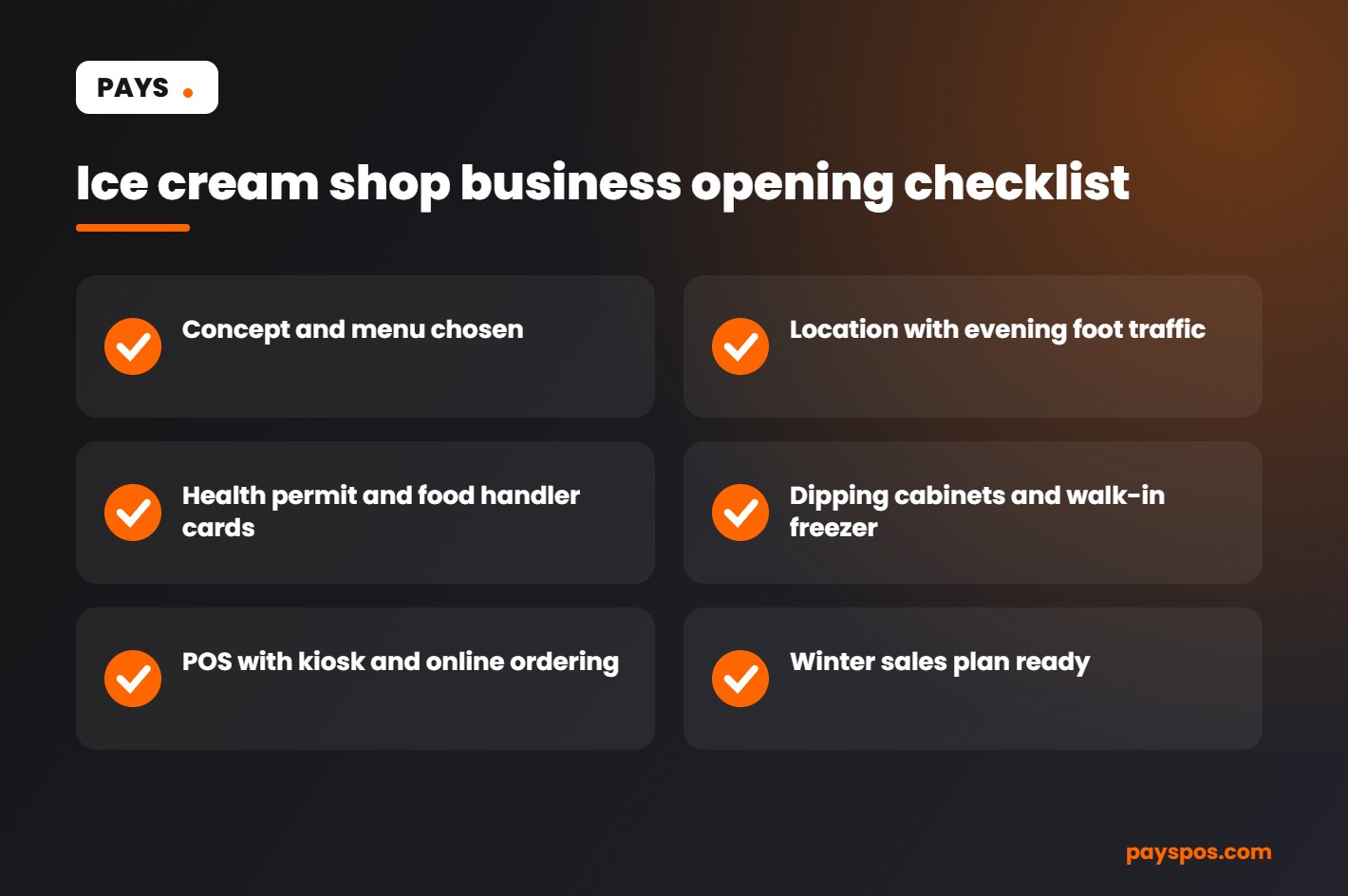
Ice Cream Shop Business Opening Checklist
Before you open the doors, make sure you have:
- A clear concept and focused menu
- A signed lease in a location with evening foot traffic
- All licenses, permits and food handler certifications
- Equipment installed, tested and covered by a maintenance plan
- A POS with your full menu, card readers and reports set up
- Trained staff and a written handbook
- A marketing plan and a soft opening date
- A winter sales plan
Marketing Your Ice Cream Shop Business on a Small Budget
Ice cream is naturally photogenic, which makes social media your best friend. Post new flavors, behind-the-scenes production and happy customers (with permission). Short videos of a perfect scoop or a towering sundae often travel far.
Other low-cost ideas include a punch-card style loyalty offer, a flavor of the month chosen by customers, school fundraiser nights, partnerships with local coffee shops and bakeries, and showing up at farmers markets and community events with a cart.
Turning Visitors Into Regulars
Regulars are the backbone of any ice cream shop business. Remember their favorite flavors, celebrate birthdays and reward frequent visits. Offer a small free topping on a slow weekday to bring them back between weekend visits.
Collect feedback and act on it. If customers keep asking for a dairy-free option or a particular flavor, consider adding it.
Planning for Growth
Once your first shop is steady, growth options include a second location, a food truck or cart for events, wholesale pints for local grocers and restaurants, or a larger catering program. Each option needs systems that scale, from recipes and training to a POS that reports on every location in one place.
Common Ice Cream Shop Business Mistakes
- Ignoring seasonality: planning for summer sales all year round.
- Too many flavors: more waste and slower service.
- No portion control: overscooping that quietly drains profit.
- Cheap equipment: freezers that fail at the worst time.
- Slow checkout: long lines that send customers elsewhere.
- Not tracking numbers: guessing instead of using real sales data.
Pricing Toppings, Cones and Add-Ons
Add-ons are where an ice cream shop business quietly earns a lot of its margin. A waffle cone, hot fudge, whipped cream or a handful of sprinkles costs little but can add a dollar or more to the ticket. Price each add-on on its own instead of folding everything into one price, and make sure your POS shows them as quick buttons so staff offer them every time.
Bundles help too. A family deal with four kids’ cones, or a sundae and shake combo for two, raises the average ticket while giving guests a simple choice. Track which bundles sell and drop the ones that don’t.
Frequently Asked Questions
How much does it cost to start an ice cream shop business?
Costs vary widely by location, size and concept. A cart or kiosk can be opened on a modest budget, while a full storefront with production equipment costs far more. Build a detailed budget that includes equipment, build-out, permits, inventory, POS and several months of operating cash.
Is an ice cream shop business profitable?
It can be, especially with strong summer sales, careful portion control and a plan for winter. Profit depends on rent, labor, pricing and how well you manage seasonality.
What is the best POS for an ice cream shop business?
Look for fast item builds, tap to pay, self-order kiosks, online ordering, inventory tracking and real-time reports. A provider that sets up your menu and trains your staff saves valuable time before opening.
How do ice cream shops make money in winter?
Many sell pints, cakes and catering, add warm drinks and baked goods, run holiday flavors and adjust hours to match demand.
Scoop Up Your Success
An ice cream shop business rewards owners who care about both the cone and the numbers behind it. Choose a clear concept, price every scoop with care, design for speed and plan for the slow season from the start.
See how the Pays POS works or talk to our team. We’ll build your menu and get you serving in under a week.