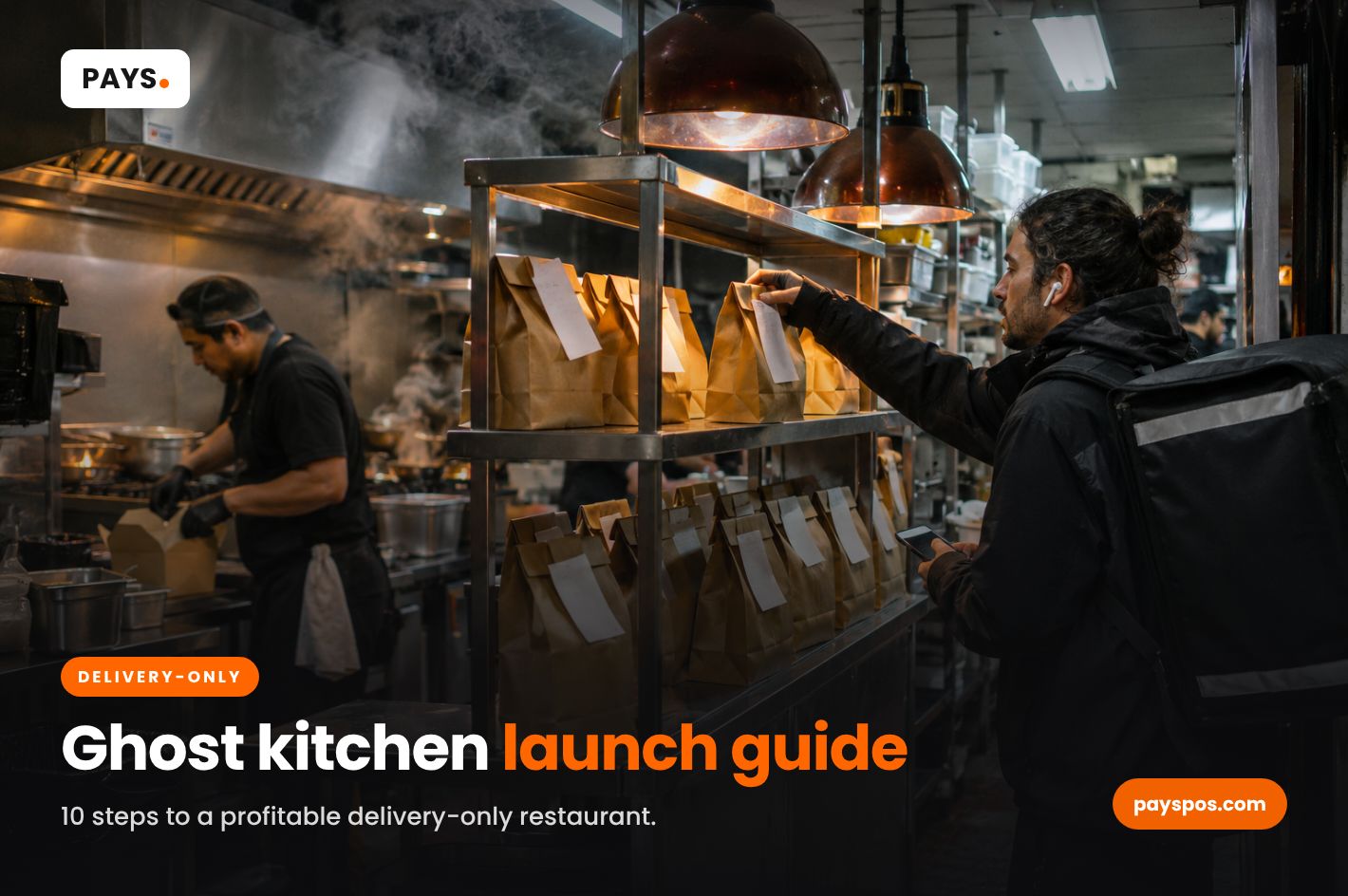
Not every restaurant needs a dining room. A ghost kitchen, also called a dark kitchen, cloud kitchen or virtual kitchen, is a commercial kitchen that cooks food only for delivery and pickup. There are no tables, no servers and no storefront. Guests find the brand on delivery apps or a website, place an order and a driver brings it to their door.
For many operators, a ghost kitchen is a lower-cost way to test a concept, reach new neighborhoods or add a second brand to an existing kitchen. It is also a business with its own challenges, from app commissions to food that has to survive a 20-minute drive.
This guide walks through 10 proven steps to launch a profitable ghost kitchen, plus the numbers, tools and mistakes every operator should know.
What Is a Ghost Kitchen?
A ghost kitchen is a food preparation space built around off-premise orders. It may be a standalone commercial kitchen, a shared facility with several brands under one roof or the back of an existing restaurant that runs extra delivery-only brands. These delivery-only brands are often called virtual brands or virtual restaurants.
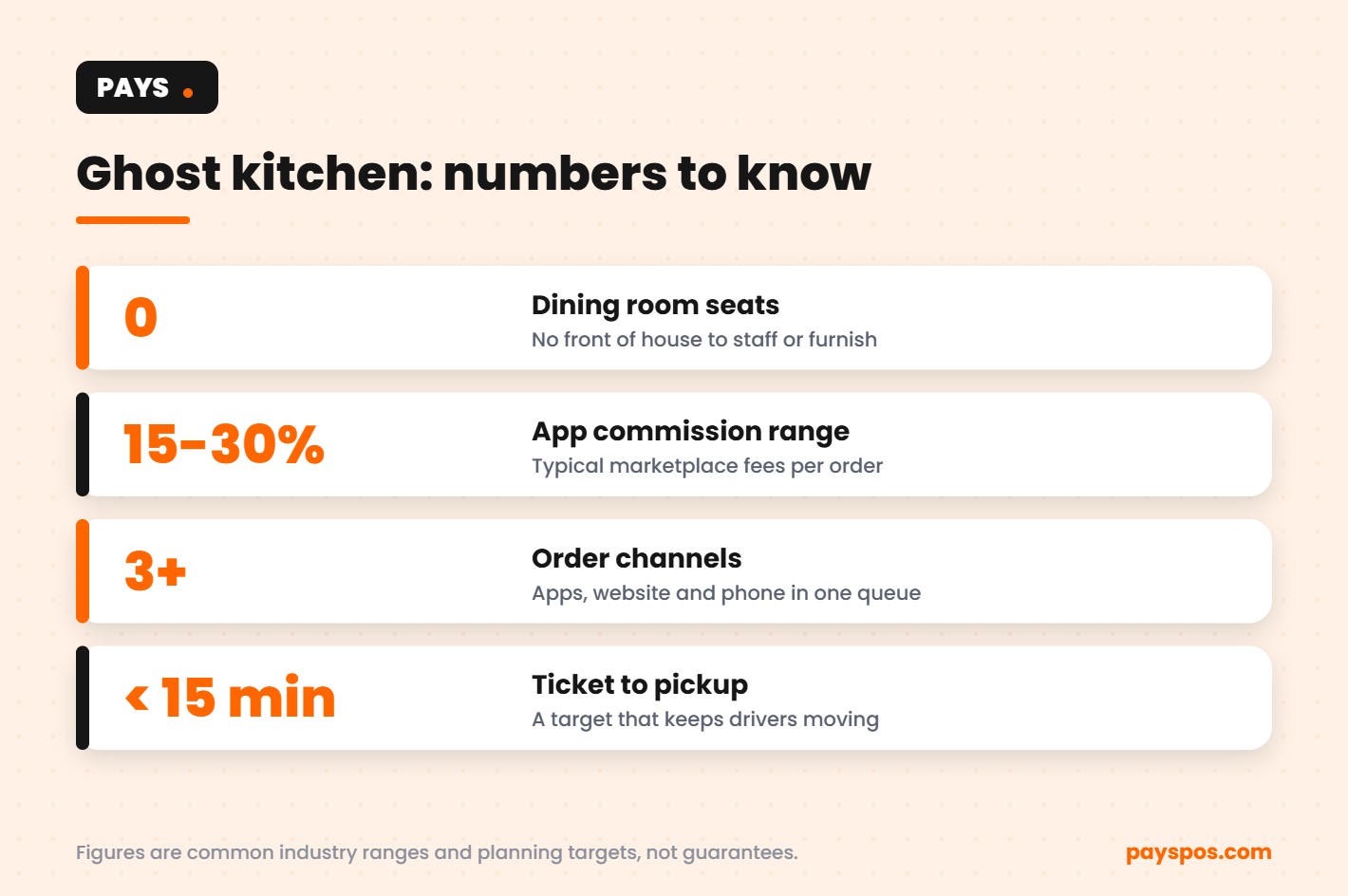
The model removes many front-of-house costs. You don’t need a prime street location, a designed dining room or a team of servers. Instead, your success depends on your menu, your packaging, your ratings on delivery apps and how quickly your kitchen gets food out the door.
Is a Ghost Kitchen Right for You?
A ghost kitchen suits operators who are comfortable with technology, care deeply about consistency and enjoy data. It can work well for:
- New founders who want to test a concept before investing in a full restaurant.
- Existing restaurants with spare kitchen capacity in slow hours.
- Caterers and chefs who already have a licensed kitchen.
- Multi-unit groups testing a new market before opening a storefront.
It is less suited to concepts that depend on the dining experience, such as fine dining, tasting menus or food that falls apart in transit. Industry groups like the National Restaurant Association share research on off-premise dining trends that can help you judge demand in your area.
Step 1: Choose a Delivery-Friendly Concept
The best ghost kitchen concepts travel well and are easy to cook quickly. Think bowls, burgers, wings, burritos, pasta, curries, sandwiches, salads and desserts. Ask three questions about every idea:
- Will it still taste good after 20 to 30 minutes in a bag?
- Can the kitchen make it consistently during a rush?
- Is there real demand for it on the apps in your delivery radius?
Search the apps in your area at lunch and dinner. Notice which categories have many options with strong ratings and which have gaps. A gap with healthy demand is your opportunity.
Step 2: Plan Your Ghost Kitchen Numbers
Margins in a ghost kitchen depend on a few key costs: food, packaging, labor, rent and the commissions delivery apps charge per order. Marketplace commissions often fall somewhere around 15 to 30 percent of the order, depending on the plan you choose.
Build a simple model for a typical order. Start with the menu price, subtract food and packaging cost, the app commission and card fees, then see what is left for labor, rent and profit. If the numbers only work at very high volume, adjust prices, portions or menu mix before you launch.
Many operators price app menus slightly higher than their direct online ordering menu to help cover commissions. Check each platform’s current terms before setting prices.
Step 3: Find the Right Kitchen Space
You have several options for a ghost kitchen space:
- Your existing restaurant kitchen: the lowest-cost way to add a virtual brand.
- A shared commissary kitchen: rent time or a station in a licensed facility.
- A dedicated ghost kitchen facility: a private kitchen pod in a building built for delivery brands.
- Your own leased space: full control, but more upfront cost.
Location still matters, just differently. Your kitchen should sit in the middle of the neighborhoods you want to serve, close to dense housing and offices, with easy parking or pickup access for drivers.
Step 4: Handle Licenses and Food Safety
A ghost kitchen needs the same food safety approvals as any restaurant, usually a business license, a health department food permit and food handler certifications. Shared facilities often hold their own permits, but each brand may still need its own license. Ask your local health department how they treat shared and delivery-only kitchens before you sign an agreement.
Step 5: Build a Tight, Fast Menu
Delivery guests scroll quickly. A focused menu of 10 to 20 items with clear photos and descriptions usually performs better than a long list. Design every item around shared ingredients so you can run one or more virtual brands without overloading your walk-in.
Write exact recipes and plating guides. Every order should look the same as the photo on the app. Consistency drives ratings, and ratings drive visibility in a ghost kitchen.
Step 6: Invest in Packaging
Packaging is your dining room. Use containers that hold heat, vent steam from crispy food and keep sauces separate. Seal bags with a sticker so guests know nobody opened their order. Add a small printed card with your website and a reason to order direct next time.
Test every menu item by driving it around for 20 minutes before you launch. If fries arrive soggy or a burger slides apart, change the packaging or the recipe.
Step 7: Bring Every Order Into One System
Many ghost kitchen operators start with a separate tablet for each delivery app. During a rush, those tablets beep at the same time, staff retype orders and mistakes multiply. One screen for every channel is one of the biggest upgrades you can make.
Look for a POS with delivery app integration that pulls Uber Eats, DoorDash and Grubhub orders straight into the same queue as your own online orders. Pair it with a kitchen display system so tickets fire in the right order with prep times visible to the whole team.
Step 8: Build Your Own Online Ordering
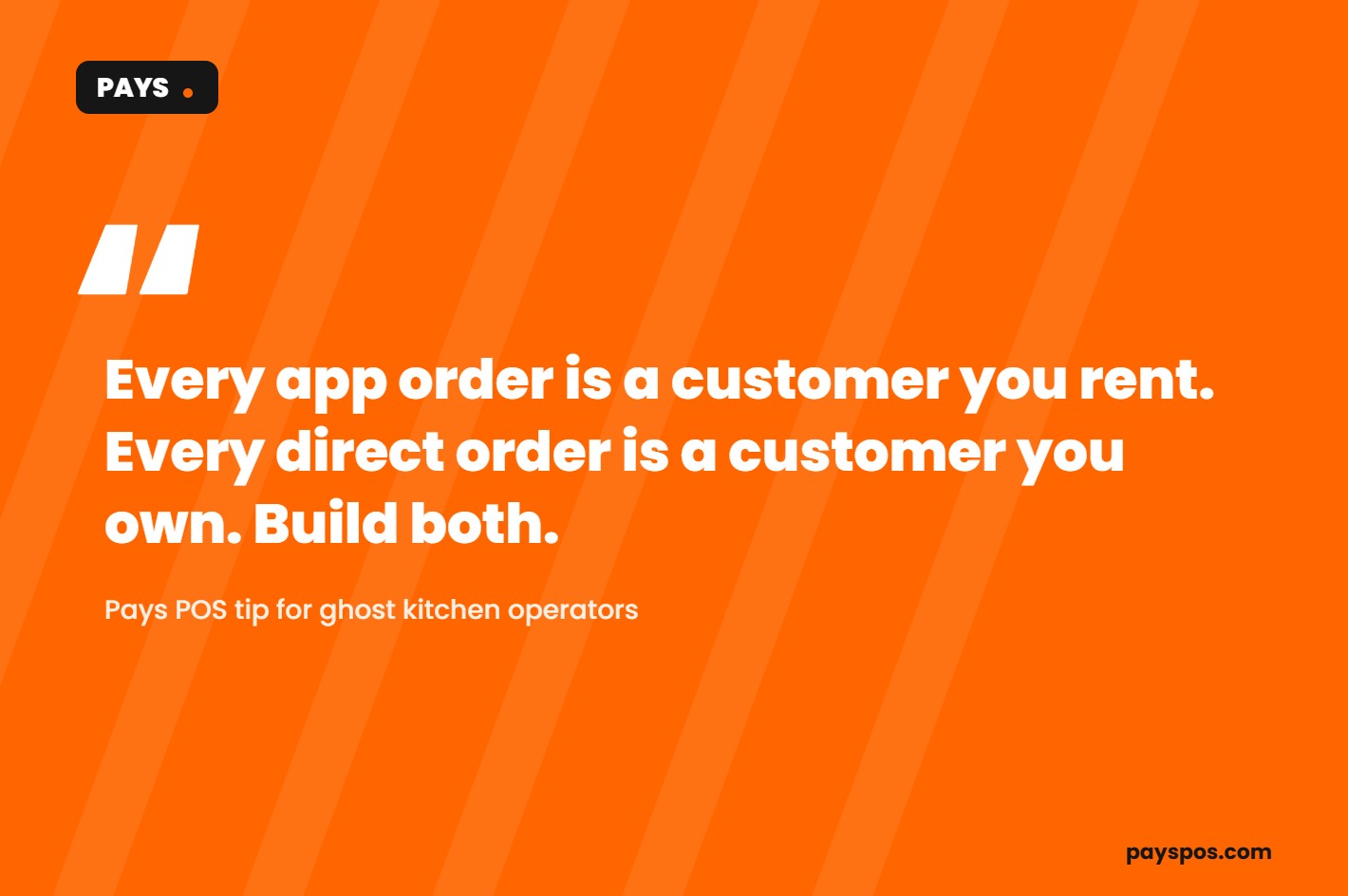
Apps help new customers find you, but each order carries a commission. Your own online ordering lets regulars order directly from your website without marketplace fees. Promote it with flyers in every bag, a small discount for ordering direct and social media posts that link to your ordering page.
Over time, the healthiest ghost kitchen businesses use apps for discovery and direct ordering for repeat customers.
Step 9: Win on the Apps
Delivery app ranking often depends on ratings, accuracy, prep time and order volume. To improve your position:
- Use bright, honest photos of every item.
- Write short, appetizing descriptions with key ingredients.
- Keep prep times accurate so drivers aren’t waiting.
- Respond to reviews politely and fix recurring issues.
- Avoid running out of items, which leads to cancellations.
Step 10: Track the Numbers Every Week
Data is the heartbeat of a ghost kitchen. Review these numbers weekly:
- Orders and sales by channel and by hour
- Average ticket per channel
- Food and packaging cost percentage
- Net revenue after commissions
- Average prep time and order accuracy
- Ratings and repeat order rate
Real-time reports in your POS make this easy, so you can spot a slow item, an expensive channel or a staffing gap before it costs you a month of profit.
Running Multiple Virtual Brands
One advantage of a ghost kitchen is the ability to run several brands from the same space. A kitchen that makes burgers might also run a chicken sandwich brand and a loaded fries brand using many of the same ingredients.
Done well, this increases orders without much extra labor. Done poorly, it confuses staff and clogs the line. Start with one brand, master it, then add a second brand only when the kitchen runs smoothly and the data shows demand.
A Day in a Ghost Kitchen
The day begins with prep: chopping, portioning sauces, cooking bases and checking packaging stock. Lunch brings a burst of office orders. The afternoon is for restocking and deep prep. Dinner is usually the busiest window, with orders from every app and the website arriving at once.
Throughout the day, one person often acts as expediter, checking each bag against its ticket, sealing it and handing it to the right driver. After closing, the team cleans, records waste and reviews the day’s sales by channel.
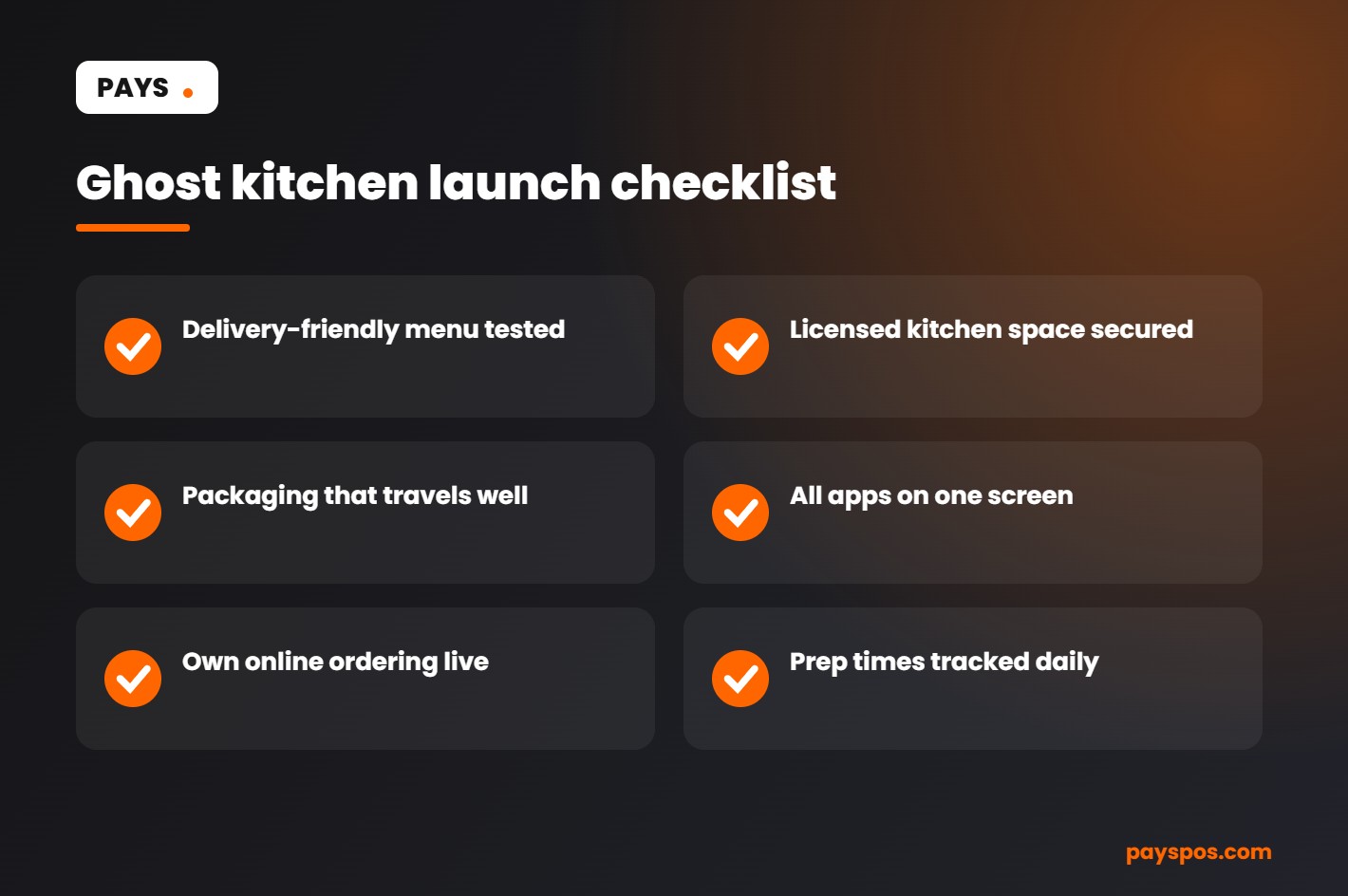
Ghost Kitchen Launch Checklist
- A tested, delivery-friendly menu with exact recipes
- A licensed kitchen space in the right delivery zone
- Packaging tested on real drives
- Accounts set up on the delivery apps you want to use
- All apps and online ordering flowing into one POS
- A kitchen display system for ticket timing
- Branded inserts that promote direct ordering
- A weekly reporting routine
Marketing a Ghost Kitchen Without a Storefront
Without a sign on the street, a ghost kitchen has to work harder to be seen. Use social media to show your food being made, run app promotions carefully during launch, partner with local offices for group lunches and collect customer emails or phone numbers through your own online ordering for future offers.
Encourage happy customers to leave reviews, and thank them with a small surprise in their next order. Word of mouth still matters, even when the restaurant is invisible.
Managing Delivery App Costs
Commissions are the biggest difference between a ghost kitchen and a dine-in restaurant. Read each platform’s plan carefully, compare the visibility and perks of each tier and calculate your margin per order on every plan. Run app-only promotions with a clear goal and an end date so discounts don’t quietly become permanent.
Keep card fees in check on your direct orders too. Some operators use dual pricing on direct orders where it is allowed, showing a cash price and a card price so the card price covers the cost of accepting cards.
Common Ghost Kitchen Mistakes
- Launching too many brands too soon: stretching staff and stock thin.
- Ignoring packaging: great food that arrives cold or soggy.
- Relying only on apps: paying commission on every repeat order.
- Tablet chaos: retyping orders and missing modifiers.
- Inaccurate prep times: frustrated drivers and late food.
- Not tracking net revenue: celebrating sales while margins shrink.
Ghost Kitchen vs Traditional Restaurant
A traditional restaurant spends heavily on things guests see: a visible location, a designed dining room, furniture, servers and hosts. A ghost kitchen moves most of that budget into the kitchen, the packaging and the digital storefront. That can lower startup costs and let you open faster.
The trade-off is control over the guest experience. In a dining room, you can fix a problem at the table. In a ghost kitchen, the last person to touch the order is a driver, and the guest’s first impression is a bag on their doorstep. That’s why accuracy, packaging and fast prep matter so much more.
Revenue also behaves differently. A restaurant earns on drinks, desserts and table turns. A ghost kitchen earns on order volume and average ticket, minus commissions. Many operators find the best results by running both models: a dine-in restaurant with one or two virtual brands cooking from the same line.
Staffing a Ghost Kitchen
Most ghost kitchen teams are small: cooks, a prep person and an expediter during busy hours. Because there’s no front of house, every role focuses on getting accurate food out quickly. Cross-train staff so anyone can cover prep, the line or packing when orders spike.
The expediter is the most important role during a rush. This person checks every bag against the ticket, confirms modifiers and sides, seals the bag and hands it to the right driver. A kitchen display system that shows timers and order status makes the job much easier and reduces missing items.
Schedule staff to your real order data. Sales by hour reports show exactly when lunch and dinner peaks begin, so you can add a cook 30 minutes before the rush instead of after it starts.
Quality Control for Delivery Orders
Ratings are the lifeblood of a ghost kitchen, and most low ratings come from a short list of problems: missing items, wrong modifiers, cold food, spills and long waits. Build simple checks into every shift:
- Print or display every modifier clearly on the ticket.
- Use a packing checklist for sauces, utensils and napkins.
- Seal every bag and label it with the order number and channel.
- Time a few orders each day from ticket to pickup.
- Read new reviews daily and share lessons with the team.
Small habits like these protect your ratings, and better ratings usually mean more visibility and more orders for your ghost kitchen.
Expanding Into New Neighborhoods
Once your first ghost kitchen is steady, you can reach new areas without building a new restaurant. Options include renting a second kitchen pod in another part of town, partnering with an existing restaurant to cook your menu under license or adding pickup lockers in busy buildings.
Before you expand, make sure your recipes, training and reporting are documented so a new kitchen can match the quality of the first one from day one.
Choosing Delivery Zones and Hours
Delivery radius affects food quality and ratings. A wider zone brings more potential customers but longer drives and colder food. Many ghost kitchen operators start with a tighter radius, then widen it once they know which items travel well. Review orders by area to see where your best customers live.
Hours matter too. Late-night delivery can be a strong opportunity in neighborhoods with students and shift workers, while early lunch may be stronger near offices. Test new hours for a few weeks and keep only the ones that pay for their labor.
Frequently Asked Questions
How much does it cost to start a ghost kitchen?
Costs vary widely. Adding a virtual brand to an existing restaurant can cost very little, while leasing and equipping a private kitchen costs much more. Budget for rent, equipment, permits, packaging, initial inventory, POS and marketing.
Are ghost kitchens profitable?
They can be when menu prices account for commissions, food cost is controlled, packaging works and a healthy share of orders comes through direct online ordering.
What POS is best for a ghost kitchen?
Choose a POS that brings all delivery apps and your own online ordering onto one screen, works with a kitchen display system and gives you real-time reports by channel.
Can I run a ghost kitchen from my existing restaurant?
Yes. Many restaurants add virtual brands using spare capacity. Check with your health department and make sure your kitchen can handle the extra volume.
Start with one strong brand, measure everything and grow only when the numbers support it. That patient approach is what separates a lasting ghost kitchen from a short experiment.
Launch Smart, Grow Steady
A ghost kitchen can be a smart, lower-cost path into the restaurant business or a way to grow an existing one. Choose food that travels, package it well, keep every order on one screen and build direct relationships with your guests.
See how the Pays POS brings every order together or talk to our team. We’ll set up your menu and get you live in under a week, with no long-term contract.