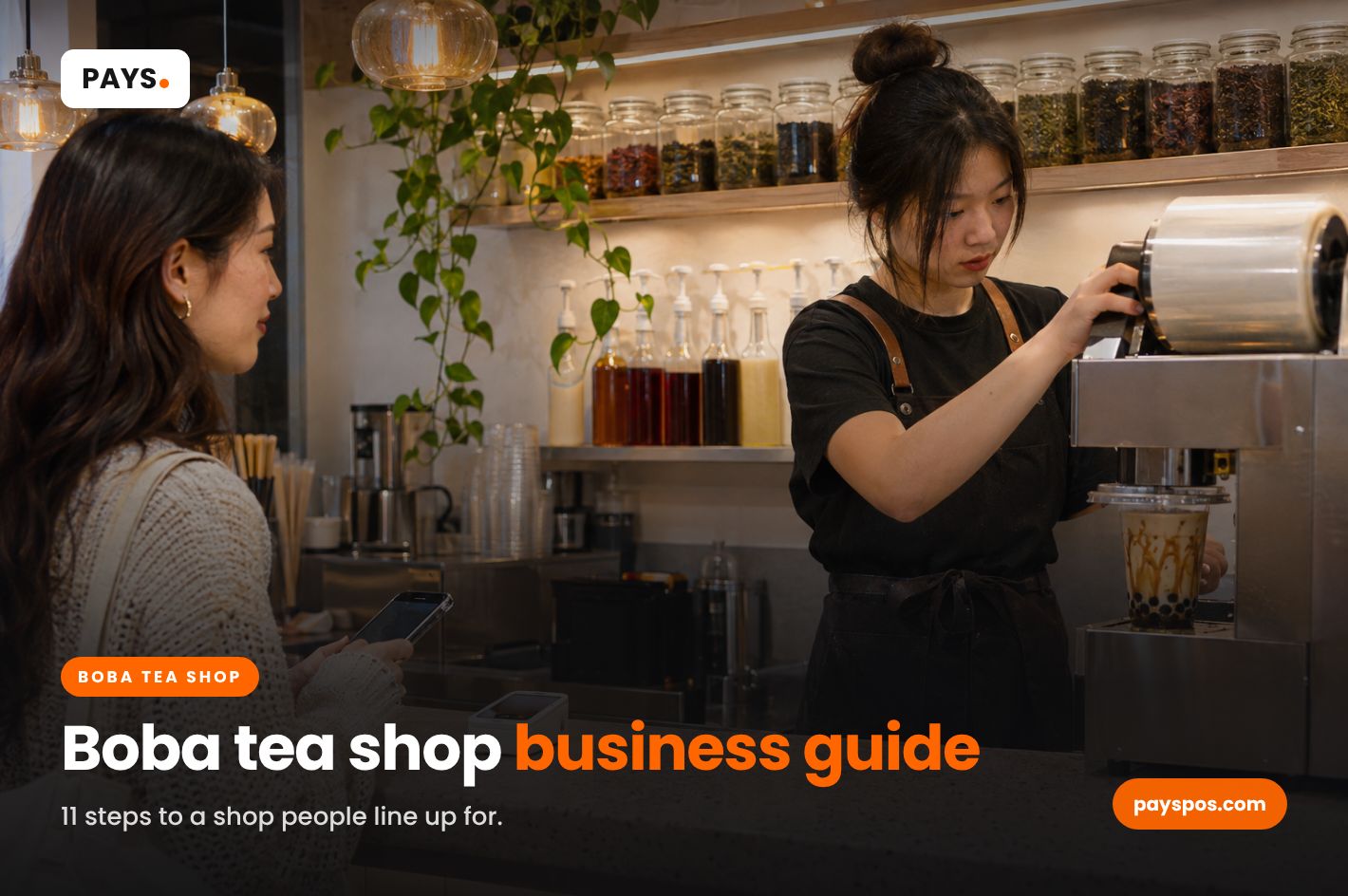
Walk past any boba shop on a Friday afternoon and you’ll often see a line of students, office workers and friends waiting for their favorite drink. Brown sugar milk tea, fruit teas loaded with jelly, taro slushes and cheese foam toppings have turned bubble tea into one of the most popular drink categories around.
That popularity makes a boba tea shop business an attractive idea. It’s also a business where details matter. Every drink is customized, tapioca pearls have a short life and lines can grow fast. The shops that thrive combine a strong menu with fast, accurate operations.
This guide covers 11 proven steps to start a boba tea shop business, from choosing your concept to pricing drinks, designing the bar and picking a POS that handles complex orders with ease.
Boba Tea Shop Business at a Glance
- A boba tea shop business runs on customized drinks, so recipes and modifiers must be consistent.
- Fresh tapioca pearls and fast service build loyalty in a boba tea shop business.
- Toppings and upgrades add margin to every cup.
- A POS with kiosks, online ordering and delivery apps helps a boba tea shop business grow.
Is a Boba Tea Shop Business Right for You?
A boba tea shop business suits owners who love experimenting with flavors, enjoy a young and social customer base and are comfortable with fast-paced service. Peak times often fall in the afternoon and evening, especially around schools, campuses and shopping areas.
The work is detailed. Staff brew tea, cook pearls, measure syrups, shake drinks and seal cups all day. Consistency is everything. A customer who loves their 50 percent sweet jasmine milk tea expects it to taste the same every time.
The good news is that boba shops often need less space than a full restaurant and can run with a small team. With a clear concept and smart systems, a boba tea shop business can grow a loyal following quickly.
Step 1: Choose Your Boba Tea Shop Concept
Your concept shapes your menu, design and price point. Popular options include:
- Classic milk tea shop: black, green and oolong milk teas with tapioca pearls and a handful of toppings.
- Fresh fruit tea bar: real fruit, tea bases and lighter drinks for health-conscious guests.
- Specialty or premium shop: loose-leaf teas, house-made syrups and signature creations at higher prices.
- Dessert-focused shop: boba drinks alongside snacks such as waffles, mochi or shaved ice.
- Kiosk or express counter: a short menu in a mall, food court or transit hub.
Choose a concept you can execute consistently. A tight, well-made menu beats a huge menu that confuses customers and slows the bar.
Step 2: Write a Boba Tea Shop Business Plan
A business plan turns your idea into numbers. It should include your concept, target market, competitors, menu, pricing, staffing, startup costs and a sales forecast. The SBA’s free business plan guide is a helpful place to start.
Visit every competitor within a few miles. Note their prices, menu size, wait times, busiest hours and what people say in reviews. Your boba tea shop business needs a clear reason for people to choose you, whether that’s better tea, faster service, a unique flavor or a more welcoming space.
Step 3: Find the Right Location
Location is critical for a boba tea shop business because many sales are impulse buys. Look for:
- Students and young professionals: near campuses, high schools and office parks.
- Shopping traffic: malls, plazas and busy retail streets.
- Visibility: a storefront people notice on the way to class or work.
- Delivery reach: a spot that drivers can reach quickly for app orders.
- Seating: a few tables help groups hang out and post about your drinks.
Count foot traffic at different times of day and on weekends before you sign anything.
Step 4: Handle Licenses and Permits
A boba tea shop business usually needs a business license, a health department food permit, sales tax registration and food handler certificates for staff. Your health department may have specific rules for storing cooked tapioca, handling dairy and holding prepared tea.
Ask your local health inspector what they expect before you design the bar. Hand sinks, refrigeration and temperature logs are easier to plan in than to add later.
Step 5: Choose Your Equipment
Typical boba equipment includes:
- Tea brewers or urns and insulated tea containers
- A pearl cooker or induction burner and pots
- Fructose dispensers or measured syrup pumps
- Shaker machines and cocktail-style shakers
- A cup sealing machine
- Blenders for slushes and smoothies
- Undercounter refrigerators and an ice machine
- A POS, card readers and label or receipt printers
Sealing machines and ice machines work hard every day. Buy reliable models and keep spare parts on hand.
Step 6: Build a Focused Menu
Customers love choice, but too many options slow the bar. Start with a core menu of eight to fifteen drinks across milk teas, fruit teas and specialty drinks, plus a clear list of toppings. Add one or two seasonal specials to keep regulars curious.
Standardize every recipe with exact measurements for tea, milk, syrup and ice. Post recipe cards at each station. Consistency is what turns first-time guests into regulars in a boba tea shop business.
Step 7: Price Every Drink for Profit
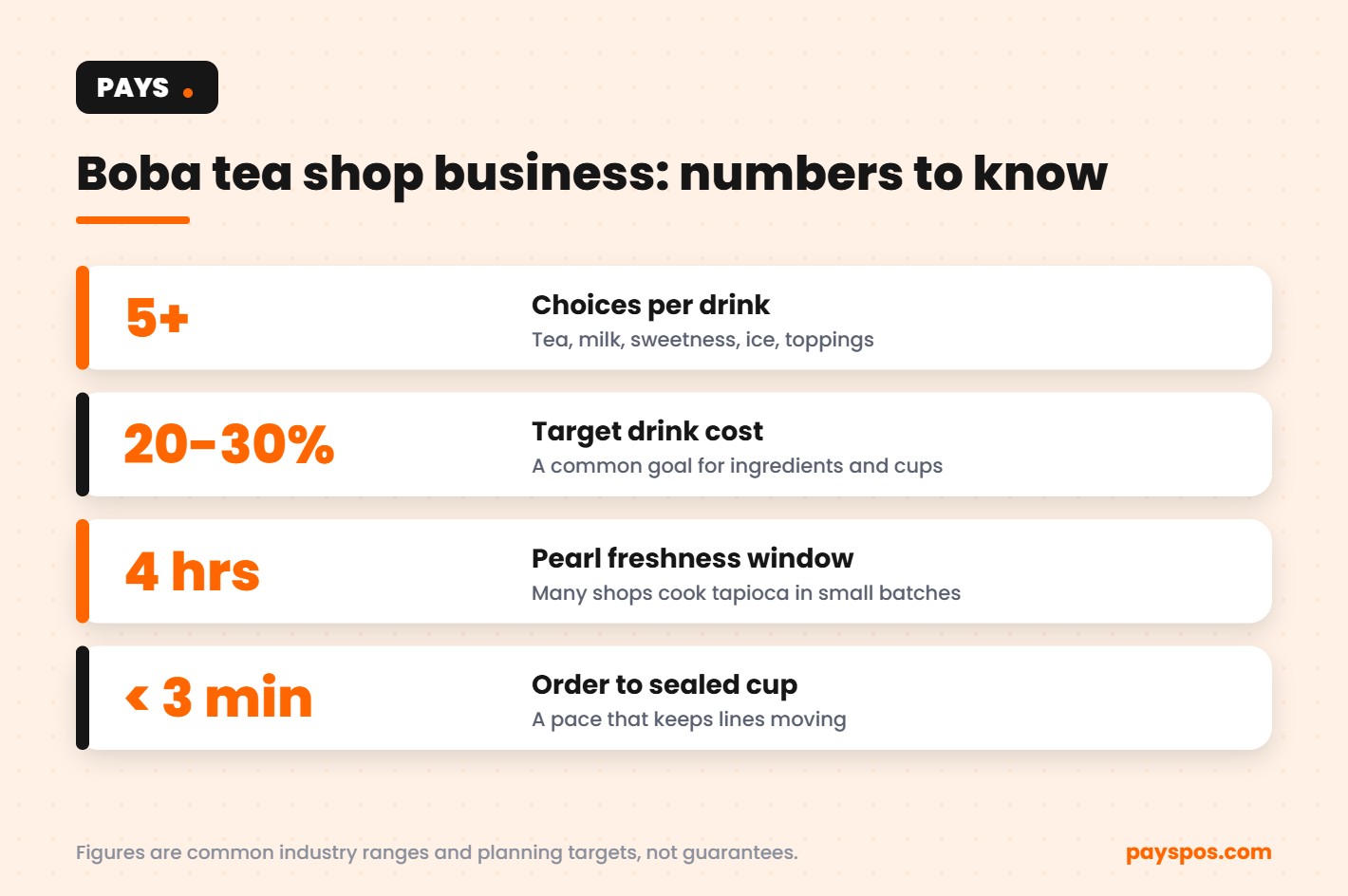
Work out the cost of every drink, including tea, milk, sweetener, toppings, cup, lid or seal, straw and bag. Many shops aim to keep drink cost around 20 to 30 percent of the menu price, depending on ingredients and location.
Price toppings and upgrades on their own. Extra pearls, cheese foam, pudding or a large size all add margin. Make sure your POS shows them as quick buttons so staff offer them consistently.
Card fees also add up. Many owners use dual pricing, which shows a cash price and a card price so the card price covers the cost of accepting the card. Done in line with card brand rules and local law, it helps you keep more of every drink you sell.
Step 8: Design the Bar for Speed
A boba tea shop business lives or dies by how fast the bar moves. A good layout follows the order of drink making: cup and label, tea, sweetener, milk or fruit, ice, shake, toppings, seal. Each step should be within reach.
- Print a label or sticker for each drink so modifications are never missed.
- Separate the ordering line from the pickup area.
- Call names clearly or show order numbers on a screen.
- Add a self-order kiosk so groups can order without holding up the line.
Step 9: Choose a POS Built for Custom Drinks
Boba orders are among the most customized in food service. One drink can have a size, tea base, milk type, sweetness level, ice level and several toppings. Your POS needs to handle that without slowing staff down. Look for:
- Fast modifiers: sweetness, ice and toppings in one or two taps.
- Self-order kiosks: guests build their own drinks and pay.
- Online ordering: orders for pickup straight from your website.
- Delivery app integration: Uber Eats, DoorDash and Grubhub orders on one screen.
- Inventory tracking: low stock alerts for tea, milk, cups and toppings.
- Real-time reports: best sellers, peak hours and topping attach rates.
The Pays POS covers all of this. We build your menu with every modifier, train your team and get you live in under a week, with no long-term contract.
Step 10: Hire and Train Your Team
Hire friendly, reliable people who can stay calm during a rush. Train them on recipes, pearl cooking, food safety, allergen questions and the POS. Use timed practice rounds so new staff learn to build drinks quickly and accurately.
A short written handbook with recipes, opening and closing checklists and customer service standards helps every shift run the same way.
Step 11: Launch With Buzz
Boba is made for social media. Post your build-out, menu reveals and taste tests. Invite local creators and students to a preview event. Offer a limited opening-week drink or a small discount for following your page.
A soft opening lets staff practice with real orders before the crowds arrive. Ask guests for honest feedback on sweetness, speed and favorite drinks.
Managing Tapioca Pearls and Ingredients
Fresh tapioca pearls are the heart of a boba tea shop business. Many shops cook pearls in small batches throughout the day and discard pearls after a set number of hours, because texture changes as they sit. Track how many batches you cook and how much you throw away, then adjust batch size to real demand.
Brewed tea also has a limited holding time. Label containers with brew times and follow a clear discard schedule. Rotate dairy and fruit using first in, first out.
Boba Tea Shop Business Models Compared
An independent shop gives you full control over menu, branding and suppliers, but you build everything yourself. A franchise provides a known brand, recipes and support in exchange for fees and less flexibility. A kiosk keeps costs low and works well in high-traffic spots, though space limits your menu. Some owners start small with a kiosk and move to a full storefront once demand is proven.
A Day in Your Boba Tea Shop Business
Mornings begin with brewing tea, cooking the first batch of pearls, prepping fruit and checking stock. Lunch brings office workers and shoppers. The after-school and evening hours are often the busiest, with groups ordering several drinks at once.
After closing, staff clean shakers, sealing machines and blenders, record waste and count the drawer. The owner reviews sales by hour and best-selling drinks, then places orders for tea, milk and supplies.
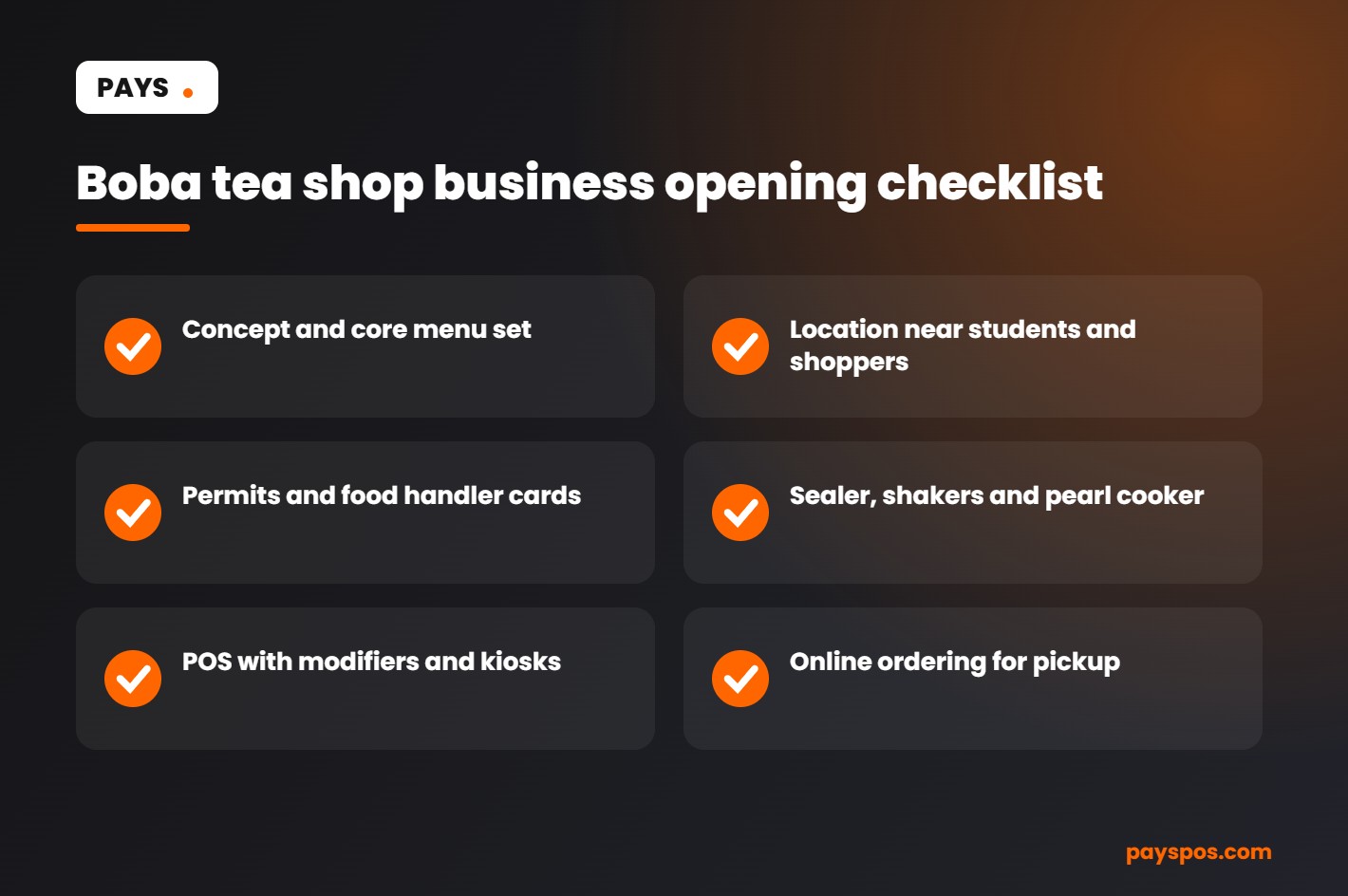
Boba Tea Shop Business Opening Checklist
- A clear concept and a focused, standardized menu
- A lease in a location with steady foot traffic
- All licenses, permits and food handler certifications
- Equipment installed and tested, including the sealer and ice machine
- A POS set up with every drink, modifier and topping
- Online ordering and delivery integrations ready
- Trained staff and a written handbook
- A launch plan for social media and opening week
Marketing Your Boba Tea Shop Business
Your customers are likely active on social media, so give them something to share. Colorful seasonal drinks, behind-the-bar videos and fun flavor names all help. A simple loyalty offer, such as a free topping after a set number of drinks, keeps people coming back.
Partner with student groups, local events and nearby businesses. Offer group orders for clubs and offices. Encourage reviews by asking happy customers directly and responding to every review, positive or negative.
Growing Beyond One Shop
Once your first location is steady, you can grow with a second shop, a kiosk in a busy mall, catering for events or bottled drinks. Each step needs consistent recipes, strong training and a POS that reports across every location in one place.
Common Boba Tea Shop Business Mistakes
- Too many menu items: slower service and more waste.
- Inconsistent recipes: drinks that taste different every visit.
- Stale pearls: holding tapioca too long to save money.
- Underpriced toppings: giving away margin on add-ons.
- Weak POS setup: missed modifiers and remade drinks.
- Ignoring online orders: losing customers who prefer to order ahead.
Handling Rushes and Group Orders
Groups are a big part of any boba tea shop business. A table of six students can order six different drinks, each with its own sweetness, ice level and toppings. Without a system, that order turns into confusion at the bar and remakes at the pickup counter.
Printed labels solve most of the problem. When the POS prints a sticker for every cup with the size, tea, sweetness, ice and toppings, the drink maker never has to remember anything. Number each cup in a group order so staff can bag them together and call the group once.
During the busiest hours, put one person on the register or kiosk area, one or two on drinks and one on pearls, toppings and sealing. Assigning clear roles prevents people from crossing paths behind the bar and keeps quality steady even when the line reaches the door.
Seasonal Drinks and Limited-Time Specials
Seasonal specials give regulars a reason to come back and give your boba tea shop business something new to post every few weeks. Think strawberry and lychee in spring, mango and watermelon in summer, pumpkin spice or brown sugar in fall and warm ginger or roasted oolong in winter.
Keep specials simple to make by reusing ingredients you already stock. Track how each one sells in your POS reports. Bring back the winners every year and quietly drop the ones that don’t move.
Limited-time drinks also work well for delivery apps and online ordering, where a fresh photo at the top of the menu can catch attention from people scrolling for something new.
Keeping Costs Under Control
Small savings add up quickly in a boba tea shop business. Buy tea, cups and lids in bulk once you know your real usage. Compare suppliers every few months. Measure syrups with pumps rather than free pouring. Train staff to fill cups to the line, not above it.
Review waste logs every week. If you are throwing away a lot of pearls or brewed tea at closing, cook and brew smaller batches later in the day. If a topping rarely sells, consider removing it so it stops expiring on the shelf.
Labor is usually your other big cost. Use sales-by-hour reports to schedule more people during the after-school and evening rush and fewer during slow mornings, instead of keeping the same staffing all day.
Creating a Space People Want to Share
Many customers choose a boba tea shop business as much for the experience as for the drink. Bright lighting, a clean counter, comfortable seating and one simple photo-friendly wall can turn a quick stop into a hangout spot. Groups that stay often order a second round or a snack.
Keep the space tidy during rushes. Empty trash often, wipe tables between groups and keep the pickup area clear. A shop that feels calm and clean during its busiest hour earns better reviews than one that looks chaotic.
Music, scent and temperature matter too. Small touches like a playlist that fits your brand and a comfortable room in summer make people want to come back with friends.
Frequently Asked Questions
How much does it cost to start a boba tea shop business?
Costs depend on location, size and whether you open a kiosk, storefront or franchise. Budget for rent, build-out, equipment, permits, initial inventory, POS and several months of operating cash.
Is a boba tea shop business profitable?
It can be. Drinks often have healthy margins when recipes are standardized, toppings are priced well and waste is controlled.
What POS is best for a boba tea shop business?
Choose a POS with fast modifiers, self-order kiosks, online ordering, delivery app integration, inventory tracking and real-time reports.
How long do tapioca pearls last?
Cooked pearls are best served within a few hours. Many shops cook in small batches and follow a strict discard schedule.
Whatever stage you are at, write down your goals for the first year of your boba tea shop business: daily drink count, average ticket, food cost and labor cost. Review them every month and adjust your menu, hours and staffing based on what the numbers tell you.
Seal the Deal
A boba tea shop business rewards owners who care about every cup. Choose a clear concept, standardize your recipes, price toppings for profit and design the bar for speed.
See how the Pays POS handles custom drinks or talk to our team. We’ll build your menu and get you serving in under a week.