Menu Engineering POS for USA Fine Dining: Use Product-mix Analysis to Boost Profits
The dining room of your fine dining restaurant is full, the kitchen’s buzzing, and every table is covered with elegantly plated dishes. Your guests are smiling, chatting, it feels like a perfect night.
But when you check the numbers the next morning, something doesn’t add up. The restaurant was packed, yet profits were thinner than expected. Some of your most popular dishes barely broke even, while others quietly carried the night.
That’s when you realize, it’s not just about what you serve, it’s about what’s working for your bottom line.
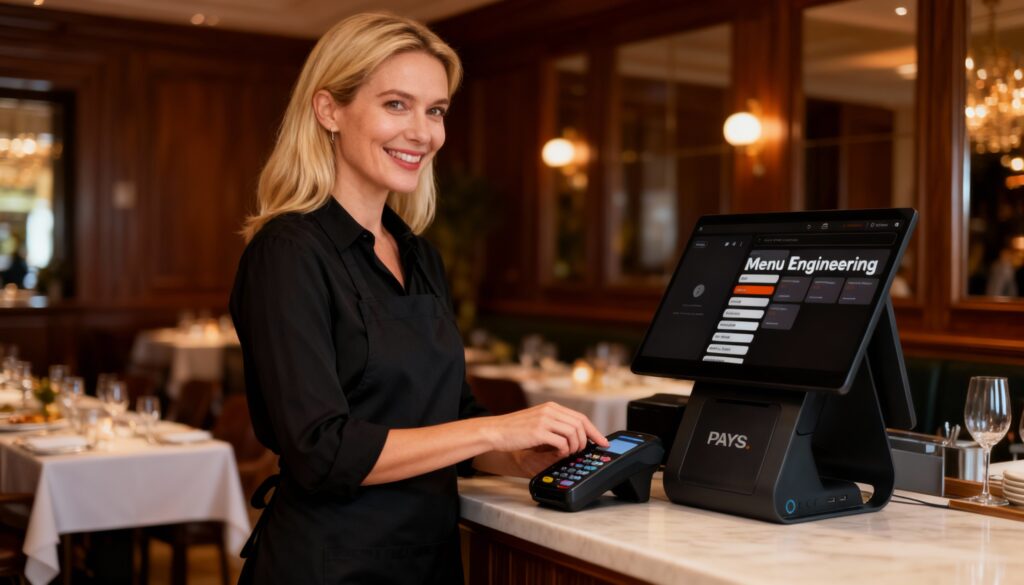
This is where menu engineering powered by a modern Menu engineering POS system steps in. It’s the art and science of understanding your menu performance through product-mix analysis revealing which dishes drive revenue, which ones drain profits, and how small pricing or positioning tweaks can change your numbers dramatically.
For fine-dining operators across the U.S., mastering this skill can mean the difference between breaking even and breaking records.
How Does a POS System Support Menu Engineering?
In fine dining, every detail matters, from the lighting and service to the final garnish on a plate. But behind all that elegance, your menu is what drives the business. It influences how your guests spend, how your chefs prepare, and how your profit margins grow.
You might assume your most popular dishes bring in the most profit but often, that’s not the case. A beautifully plated entrée might sell out every night, yet its food cost could quietly be draining your bottom line. Without data, you’re making decisions based on instinct and even seasoned instincts can miss what the numbers reveal.
That’s where menu engineering makes all the difference. It helps you view your menu like a strategist, not just a chef. Instead of guessing, you start managing your menu with precision.
With a smart Menu engineering POS system, you can easily:
- Identify top performers: See which dishes bring in both high sales and high profit.
- Spot hidden opportunities: Find underrated items that deserve better placement or pricing.
- Balance your menu: Adjust prices and portions to align with your food costs and profit goals.
- Eliminate low-value items: Detect dishes that take effort but don’t return value.
- Boost average check value: Use insights to upsell or bundle profitable combinations.
For U.S. fine-dining restaurants where labor costs, ingredient sourcing, and guest expectations are constantly rising, menu engineering isn’t a luxury; it’s your competitive edge.
The more you understand what your guests love and what truly pays off, the better you can design a menu that delights diners and protects your margins.
What Are the Key Strategies for Menu Engineering Using POS Data?
Once you start tracking your menu performance through your POS system, the real magic happens when you move from guessing to strategizing. Every plate, price, and portion can be optimized to drive higher profits without compromising guest experience. Here’s how you can do it:
1. How Can Product-Mix Analysis Improve Profitability?
Your POS data holds the truth about what’s working and what’s not. Use product-mix analysis to group menu items into four categories:
- Stars: High sales + high profit. Highlight them visually on your menu.
- Plow horses: High sales + low profit. Keep them, but review pricing or portion sizes.
- Puzzles: Low sales + high profit. Promote them with better descriptions or staff recommendations.
- Dogs: Low sales + low profit. Consider removing or reimagining them.
This gives you a clear visual map of where your menu’s strength and weaknesses lies.
2. How Should You Design a Menu Layout That Drives Profit?
Your guests’ eyes don’t scan menus randomly; they follow visual patterns.
Use that to your advantage by:
- Placing high-margin items in focal areas (like the top-right section of the menu).
- Using boxes, icons, or subtle highlights to draw attention to your “Stars.”
- Keeping low-profit items less prominent without removing them entirely.
Tip: A strategically designed menu layout can increase average check value by 10–15% without changing your recipes.
3. How Do You Set the Right Prices for Each Dish?
Menu pricing should reflect value, not emotion. Use your POS insights to identify pricing gaps.
- Review your food cost percentage for each dish.
- Raise prices slightly on high-demand, low-cost items.
- Offer bundles or tasting menus featuring high-margin items.
- Track guest reactions through POS feedback or sales data after changes.
Your goal isn’t to charge more, it’s to price smarter.
4. How Can Staff Training Boost Menu Performance?
Your servers are your sales team and your POS can help them sell better.
- Share POS-driven insights about top-margin dishes during pre-shift briefings.
- Encourage upselling of profitable add-ons (e.g., wine pairings, premium sides).
- Reward your team for pushing featured menu items or combos.
When your staff knows what drives profit, they sell with purpose, not pressure.
5. How Often Should You Review and Update the Menu?
Menu engineering isn’t a one-time project; it’s an ongoing process.
- Review product-mix data monthly to stay ahead of trends.
- Adjust based on seasonal ingredients, guest feedback, and performance data.
- Remove underperforming items quickly to keep your menu lean and focused.
- Celebrate wins when a “Puzzle” becomes a “Star” that’s growth you can measure.
Consistency turns insights into impact. Your POS system gives you a living pulse of your menu and when you act on it regularly, profitability follows naturally.
When you blend menu creativity with POS intelligence, you turn your restaurant from a beautiful dining room into a finely tuned business engine, one dish, one decision, one data point at a time.
Also Read: Why PAYS POS is the Fastest Checkout for Restaurants
What Are the Most Common Mistakes in Menu Engineering?
Even the best fine-dining operators make missteps when implementing menu engineering. The good news? Most of them are easy to fix once you know what to look for.
Here are the most common mistakes to avoid when using your POS for menu optimization:
- Relying on gut feeling instead of data:
You may love a dish, but if the numbers show it’s underperforming, it’s time to rethink it. Let your POS data guide your decisions ,not emotions. - Ignoring profitability when pricing:
Setting prices based only on competitors or food costs misses the bigger picture. Consider perceived value, portion size, and guest behavior before finalizing prices. - Failing to update the menu regularly:
A menu that doesn’t evolve becomes stale. Review your product-mix reports monthly to remove low performers and refresh based on seasonal demand. - Overloading the menu with too many options:
Too many choices overwhelm guests and slow down the kitchen. Focus on quality over quantity highlights profitable, popular, and brand-aligned dishes. - Overlooking staff training:
Your servers can make or break menu performance. If they don’t understand which dishes drive profit, they can’t promote them effectively. - Skipping visual menu design strategy:
Even great dishes get ignored if they’re hidden. Use menu layout psychology to position high-margin items where guests’ eyes naturally go first. - Not tracking post-change performance:
After redesigning your menu, always measure the impact. Use POS analytics to see if sales mix, profit margins, or average ticket values improved.
Pro Tip:
Your POS isn’t just a transaction tool, it’s a decision engine. The more you refine your menu based on data, the more predictable your profits become.
Why Is PAYS POS the Best System for Menu Engineering in the USA?
Other POS systems give you data but not decisions. PAYS POS connects the dots:
- Product-mix analysis with actionable dashboards
- 0% processing fees with dual pricing
- Hardware + training included
- Third-party integrations for payroll, HR, and delivery
Competitors leave you paying 3.5%+ in processing fees before you even see your profit. With PAYS POS, you get 0% fees + smarter menu design tools.
What Are the Future Trends in Menu Engineering for 2025?
The future is clear: POS-driven menu engineering will be the new normal.
- AI-Driven Menu Optimization:
POS systems are getting smarter. Expect AI to automatically analyze sales data, customer preferences, and time-of-day performance then recommend pricing or item placement changes that can boost your profits in real time. - Dynamic Pricing Strategies:
Restaurants are beginning to experiment with data-backed dynamic pricing, adjusting menu prices based on demand, seasonality, and ingredient costs just like airlines and hotels do. - Sustainability-Based Menu Decisions:
Guests now care about what’s on their plate and where it comes from. Expect more fine-dining venues to use POS data to track food waste, carbon footprint, and supplier impact when designing future menus. - Personalized Guest Insights:
Your POS can already tell you what sells but the next step is understanding who buys. Personalized menu recommendations, loyalty-driven promotions, and tailored dining experiences will shape higher retention rates. - Integration of Mobile & QR-Driven Menus:
Digital menus will become more intelligent automatically updating in sync with your POS when items sell out, or promoting chef specials based on live inventory and performance data. - Continuous Feedback Loops:
Expect tighter integration between guest feedback tools and POS analytics, helping you see how menu changes influence satisfaction, ratings, and repeat visits instantly.
- AI-Driven Menu Optimization:
How Can Menu Engineering Transform Fine Dining Profitability?
Fine dining success isn’t about guessing what guests will order, it’s about knowing what’s profitable.
With menu engineering POS tools like PAYS POS, you can read the real story behind your sales mix, cut out waste, and boost margins without sacrificing your brand.
So, are you still reading tea leaves, or are you ready to see the numbers?
FAQs
Unlike others, PAYS POS combines Pmix analysis with 0% processing fees, hardware, and integrations—making it the most complete fine dining POS solution.
PAYS POS provides real-time Product-Mix (Product mix) analysis, contribution margin tracking, and sales mix insights so operators can design profitable menus instead of relying on gut instinct.
Unlike competitors that only give raw data, PAYS POS delivers actionable dashboards, dual pricing for 0% processing fees, and third-party integrations that connect menu insights with payroll, delivery, and loyalty tools.
Weekly. Unlike traditional seasonal reviews, PAYS POS lets you monitor real-time performance so you can react quickly before underperforming items hurt margins.
The system breaks down margins by menu item, category, and even shift (lunch, dinner, brunch), helping fine dining restaurants price strategically for each service period.
Yes. With its upsell recommendations and bundling insights (like pairing pasta with premium wine), operators can boost check averages without hurting guest perception.
PAYS POS eliminates processing fees with its 0% dual pricing model saving restaurants thousands per year in hidden costs that competitors like Square or Toast charge.
Yes. It integrates with payroll, HR, and delivery platforms, allowing fine dining operators to connect financial, staffing, and menu data seamlessly.
Absolutely. PAYS POS offers centralized reporting across locations, letting operators compare performance and apply successful menu strategies chain-wide.
PAYS POS is prepared for AI-driven predictive menu analysis, dynamic pricing, and loyalty integration, ensuring restaurants stay ahead of market shifts.