How a Restaurant Point of Sale System Streamlines Front- and Back-of-House Operations
Are your front-of-house and back-of-house teams really working together or just working in parallel?
In many restaurants, the biggest operational breakdown doesn’t happen during a rush or a staffing shortage. It happens in the gap between the order being taken and the order being prepared. A missed modifier, a delayed ticket, or a confused server can turn a great dining experience into a frustrating one. This is where a modern restaurant point of sale system changes the game.
By acting as a single source of truth for orders, payments, and kitchen workflows, the right POS doesn’t just process transactions. It quietly orchestrates how your entire restaurant operates, from the dining floor to the kitchen line.
Let’s take a look at how your restaurant point of sale system can streamline front- and back-of-house operations.
What Is a Restaurant Point of Sale System?
A restaurant point of sale (POS) system is more than a digital cash register; it’s the central operating system that connects your front-of-house and back-of-house teams in real time. It combines software and hardware to manage orders, payments, menus, staff access, and kitchen communication from a single platform.
In the front of the house, the POS helps servers take accurate orders, process payments quickly, and manage tables efficiently. In the back of the house, it sends orders instantly to the kitchen, tracks preparation times, and keeps inventory aligned with what’s being sold. When both sides run on the same system, information flows seamlessly, reducing delays, errors, and confusion during service.
Modern restaurant POS systems also generate real-time data and insights, giving owners and managers visibility into sales trends, menu performance, and operational bottlenecks making the POS a strategic tool, not just a billing solution.
Common Front- and Back-of-House Challenges Without a POS System
When a restaurant relies on manual processes or disconnected tools, even experienced teams struggle to stay in sync. Small gaps in communication quickly turn into costly operational issues.
Front-of-house challenges include:
- Manual order taking that increases the risk of errors
- Missed or unclear modifiers and special requests
- Slow billing and checkout during peak hours
- Longer wait times and reduced table turnover
- Inconsistent service across staff shifts
Back-of-house challenges include:
- Delayed or incomplete order information reaching the kitchen
- Confusion over ticket priority during rush hours
- Lack of visibility into real-time order volume
- Reactive inventory management and stock shortages
- Increased food waste due to poor tracking
Without a centralized restaurant point of sale system, front- and back-of-house teams operate in silos. The result is more errors, slower service, frustrated staff, and an inconsistent customer experience, especially when the restaurant is at its busiest.
Also Read: Why Modern Restaurants Can’t Survive Without a Smart POS System
How a Restaurant POS Streamlines Front-of-House Operations
A modern restaurant point of sale system simplifies front-of-house workflows by removing manual steps and giving staff the tools they need to serve customers faster and more accurately.
Key ways a POS improves front-of-house efficiency include:
- Faster order taking: Digital menus and tableside ordering reduce wait times and speed up service.
- Improved order accuracy: Modifiers, special requests, and upsells are captured clearly at the point of order.
- Quicker payments: Multiple payment options and split bills streamline checkout and table turnover.
- Better table management: Real-time table status helps hosts and servers seat guests efficiently.
- Stronger staff coordination: Order status visibility keeps servers informed without repeated kitchen check-ins.
By minimizing friction at every customer touchpoint, a restaurant POS helps front-of-house teams focus less on processes and more on delivering a smooth dining experience.
Also Read: Point of Sale Software That Increases Speed, Accuracy, and Daily Revenue
How a Unified POS Connects Front- and Back-of-House Teams
The real power of a restaurant’s point of sale system lies in its ability to act as a single source of truth for the entire operation. When both front-of-house and back-of-house teams work on the same platform, coordination becomes seamless rather than reactive.
A unified POS ensures that every order update, new tickets, modifications, cancellations, or delays is reflected in real time across the restaurant. Servers no longer need to repeatedly check with the kitchen, and kitchen staff don’t have to guess what’s happening on the floor.
With a connected POS system:
- Order status updates keep servers informed automatically
- Kitchens receive accurate, real-time instructions without interruptions
- Managers gain visibility into service flow and bottlenecks
- Customers experience consistent service from order to delivery
By bridging the gap between the dining floor and the kitchen, a unified restaurant POS creates smoother workflows, reduces stress during peak hours, and delivers a more reliable guest experience.
Key Benefits of a Streamlined Restaurant POS System
When front- and back-of-house operations are aligned through a modern restaurant point of sale system, the impact is felt across the entire business not just at checkout.
The most important benefits include:
- Faster service times: Real-time order flow reduces delays and keeps service moving smoothly.
- Higher order accuracy: Digital orders and clear modifiers minimize mistakes and rework.
- Improved staff productivity: Teams spend less time coordinating and more time executing.
- Better customer experience: Consistent, reliable service leads to higher satisfaction and repeat visits.
- Increased profitability: Efficient operations, reduced waste, and better insights drive stronger margins.
By streamlining everyday workflows, a restaurant POS system helps operators run tighter, smarter, and more scalable operations especially during peak business hours.
How PAYS Restaurant POS Helps Streamline Front- and Back-of-House Operations
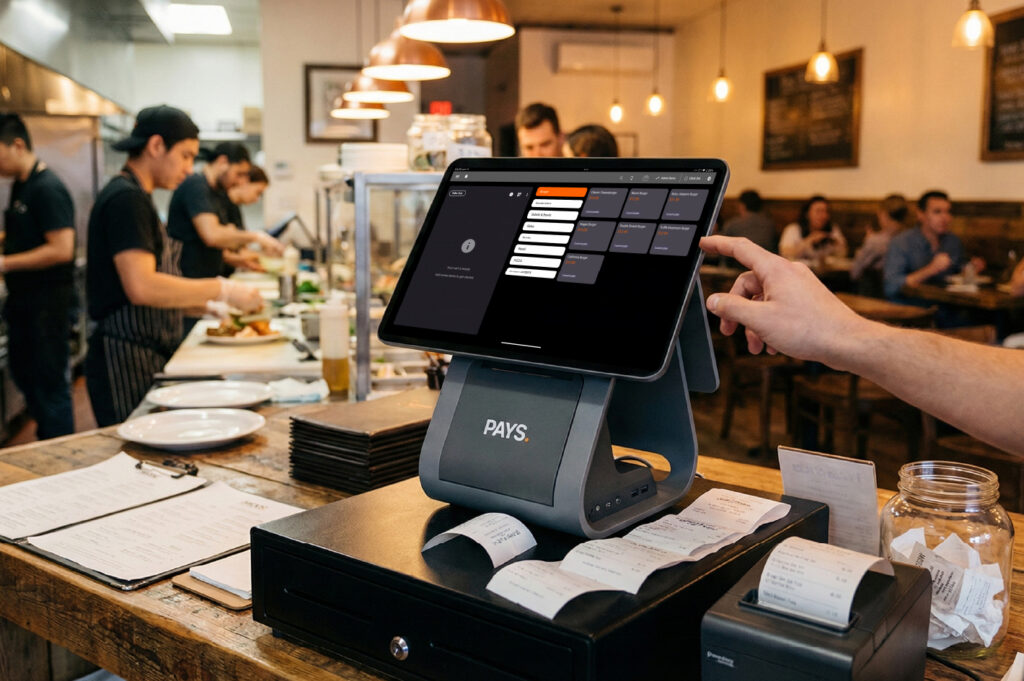
PAYS Restaurant POS is designed to eliminate operational gaps by bringing your front- and back-of-house teams onto a single, intelligent platform. Instead of juggling multiple tools, restaurants get a unified system that keeps orders, payments, kitchen workflows, and insights perfectly in sync.
With real-time order flow from the dining floor to the kitchen, PAYS ensures that every ticket, modifier, and update is communicated instantly, reducing errors and service delays. Managers gain a centralized view of operations through the KDS, helping them make faster, data-driven decisions during both peak and off-peak hours.
Key advantages of PAYS Restaurant POS include:
- Unified dashboards for front- and back-of-house visibility
- Seamless integration with kitchen display systems and POS hardware
- AI-powered insights to optimize staffing, inventory, and menus
- Scalable architecture for single-location and multi-location restaurants
PAYS Restaurant POS helps restaurants operate more efficiently, deliver consistent service, and grow with confidence by connecting people, processes, and data .
Conclusion
The difference between a chaotic service and a smooth one often comes down to systems, not staff. When front-of-house and back-of-house teams rely on the same restaurant point of sale system, every order, update, and insight moves in sync. The result is fewer mistakes, faster turnaround times, and a dining experience that feels effortless to the customer. A well-integrated POS doesn’t just support daily operations it creates the foundation for long-term efficiency and sustainable growth.
If your restaurant is ready to move beyond manual processes and disconnected tools, it’s time for a smarter approach. Explore how PAYS Restaurant POS helps restaurants run faster, leaner, and more connected, every shift, every service.
Get started with PAYS and turn operational efficiency into a competitive advantage. Book a demo now.
FAQs
PAYS instantly sends orders and updates to the kitchen, keeping both teams in sync and reducing errors.
Yes, digital menus, modifiers, and real-time updates ensure every order is accurate.
Absolutely PAYS is scalable and provides centralized dashboards for managing multiple locations.
PAYS tracks stock automatically and provides alerts for low inventory, helping prevent shortages and waste.
Yes, AI-powered analytics help optimize staffing, menu decisions, and operational efficiency.